How ChatGPT Helped Me Survive the CES Inbox Flood — and Find the Stories That Mattered

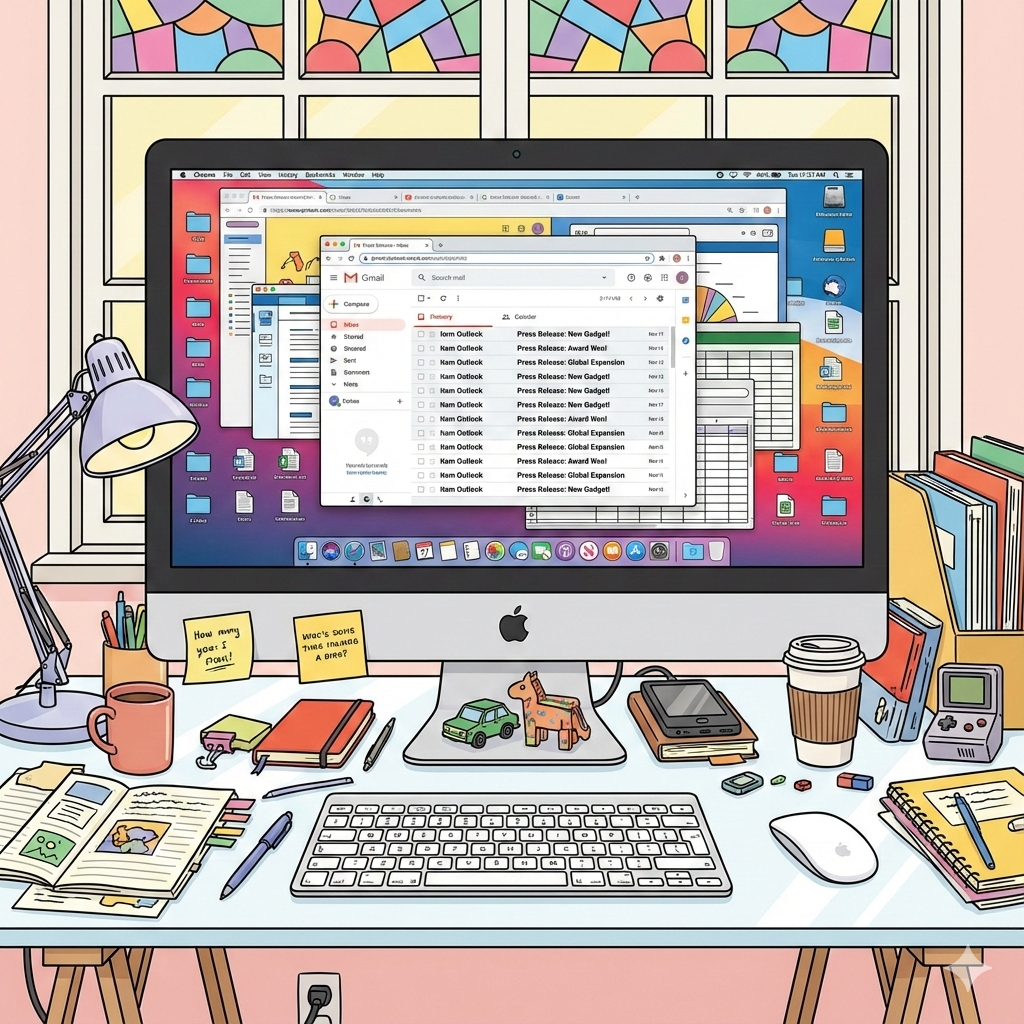
This illustration doesn’t quite capture the scale of the CES press-release takeover on my 27” iMac.

Every January, CES (the Consumer Electronics Show) takes over Las Vegas — and my inbox.

Last year, in the weeks leading up to the show, press releases arrived in a steady stream that quickly became a torrent. For CES 2025, I received well over a hundred pitches. As a writer, creator, and lifelong learner, I genuinely want to discover innovations that are offbeat, curious, or quietly meaningful — the kinds of stories readers enjoy.

But this volume creates a problem.

Last year, I was short on time. I was skimming, deleting, and moving on, all while knowing I was probably missing something interesting. Worse, the process caused a constant, low-grade anxiety: What if the best story is buried in here somewhere?

Complicating things further, I was also dealing with a personal emergency. I didn’t have the bandwidth to manually sift through everything — and I knew I needed a better system.

So, I turned to ChatGPT. Not just as a chatbot, but as a virtual research assistant I jokingly call “Chad.”

What followed changed how I approach CES — and any overwhelming information flood.


Step 1: Crunch Time — Getting Organized (Finally)

If you haven’t used an AI assistant this way before, CES season is a perfect moment to try.

Exhibitors invest heavily to attend CES, hoping for press coverage, mentions, or at least a conversation. Some pitches are thoughtful and compelling. Many… are not. Sifting through them manually to decide what’s worth pursuing is tedious and time-consuming.

That’s exactly where an AI assistant can help.

Rather than reacting emotionally to the flood, I decided to build a repeatable system for evaluation — one that would let me move quickly without missing the signal in the noise.


Step 2: Building a Framework for Evaluation

To help ChatGPT assist me effectively, I created a clear structure for reviewing each pitch. Whether I pasted individual emails or uploaded batches at once, I asked it to assess the following criteria:

  1. Venue and Booth Location
    Where would the exhibitor be located? A niche startup area like Eureka Park, or a major hall with established players?
  2. Sector
    What category did the product fall into — AI, mobility, health tech, sustainability, education, or something else?
  3. Innovative Angle
    Was this genuinely new, or just a repackaging of something familiar? Did it solve a real problem?
  4. Consumer Appeal
    Would this resonate with everyday users, or was it designed for a narrow professional audience?
  5. Logistics
    Were booth numbers, demo times, and press invites clearly stated and actionable?

I uploaded emails in batches and let ChatGPT do the heavy lifting — summarizing each pitch concisely, flagging missing information, and highlighting potential standouts.

(As an aside: it’s astonishing how many exhibitor emails omit basic details like venue or booth number. Truly bonkers.)


Step 3: Panning for Gold

Once the summaries started rolling in, patterns emerged.

From wearable AI wristbands and gamified education tools to sustainable tech and even stringless guitars, I began pulling the top two or three candidates from each batch. I then asked “Chad” to compare themes across sectors and organize everything into a working matrix.

That matrix included:

  • Company name
  • Product category
  • Venue and booth number
  • Core innovation
  • Why it stood out

This gave me something I’d never had before: a bird’s-eye view of CES. Instead of reacting to noise, I could see where fresh ideas were brewing.


Step 4: The Final Stretch (and Cross-Device Flexibility)

With my flight approaching, I did a few final reviews on my phone, feeding new summaries into the system. Later, back at my computer, I asked ChatGPT to update the matrix with the latest insights.

This is where AI tools really shine: they’re fluid. I could pause, resume, refine, and synthesize — without losing momentum.

Most importantly, I felt calmer. I wasn’t drowning in information anymore. I had a capable research assistant working alongside me.


What Rose to the Top

Here are a few of the less-conspicuous discoveries that surfaced through this process — companies I might have otherwise missed:

Y-Brush

A 20-second toothbrush with medical backing and a unique design. I found it strange and compelling enough to consider an interview. Ultimately, the design didn’t win me over, so I passed — but they’re debuting a new product at CES 2026, and I’m curious to see what’s next. Website: https://y-brush.co/
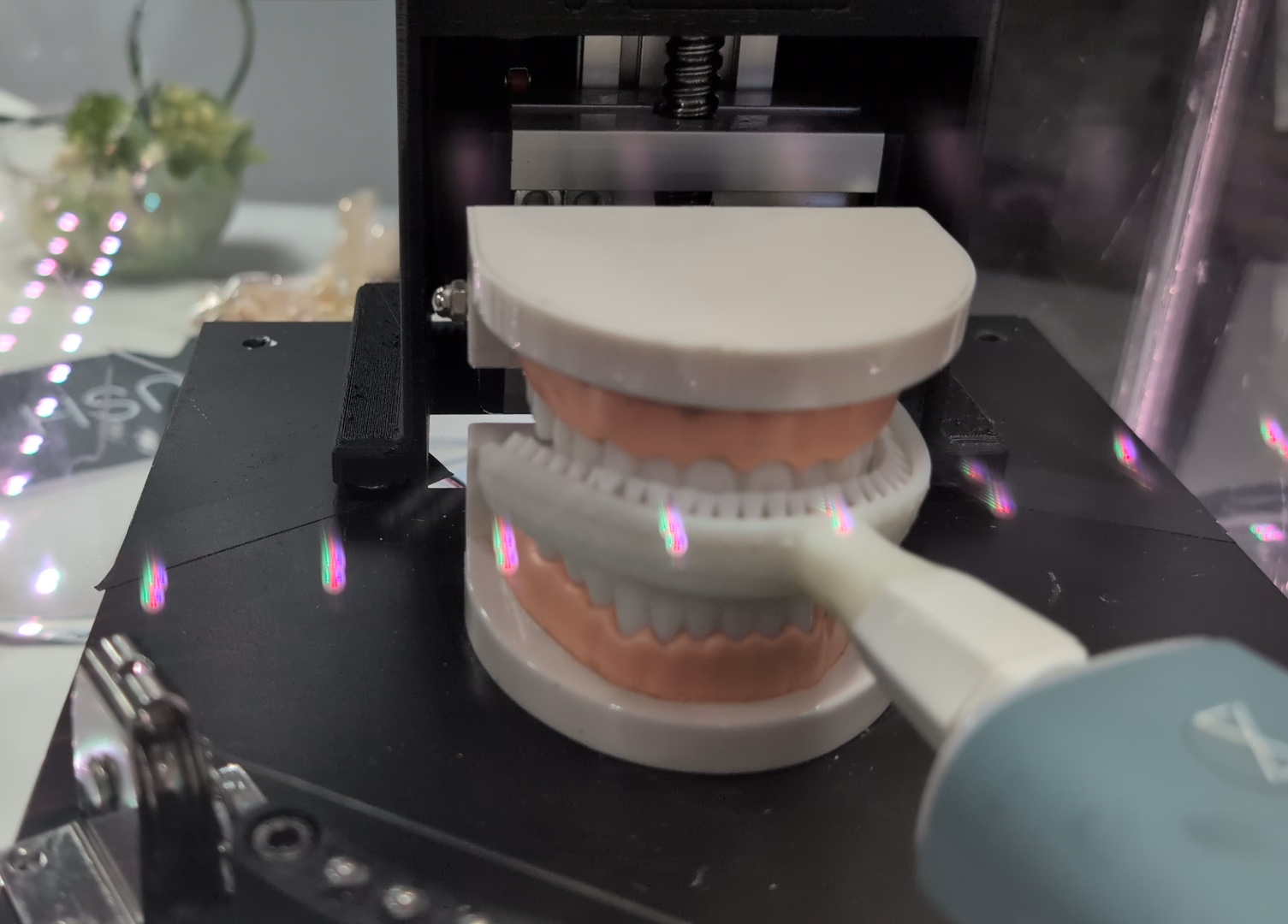
Y-Brush device that debuted at CES 2025
(I’ll admit it: I’m a brushing fanatic, and this one didn’t quite do it for me.)

Urtopia E-Bike

Featuring one of the world’s lightest, torque-dense motors and an AI-powered riding assistant. Once on the show floor, I found the bike visually impressive — though I couldn’t connect with anyone for a deeper conversation.

POSKOM

A standout in medical technology, POSKOM produces high-quality diagnostic X-ray systems, including portable battery-powered models used in both medical and veterinary settings. This exhibit exceeded expectations and went on to win a CES 2025 Best of Innovations Award.  Website: 🔗poskom.com
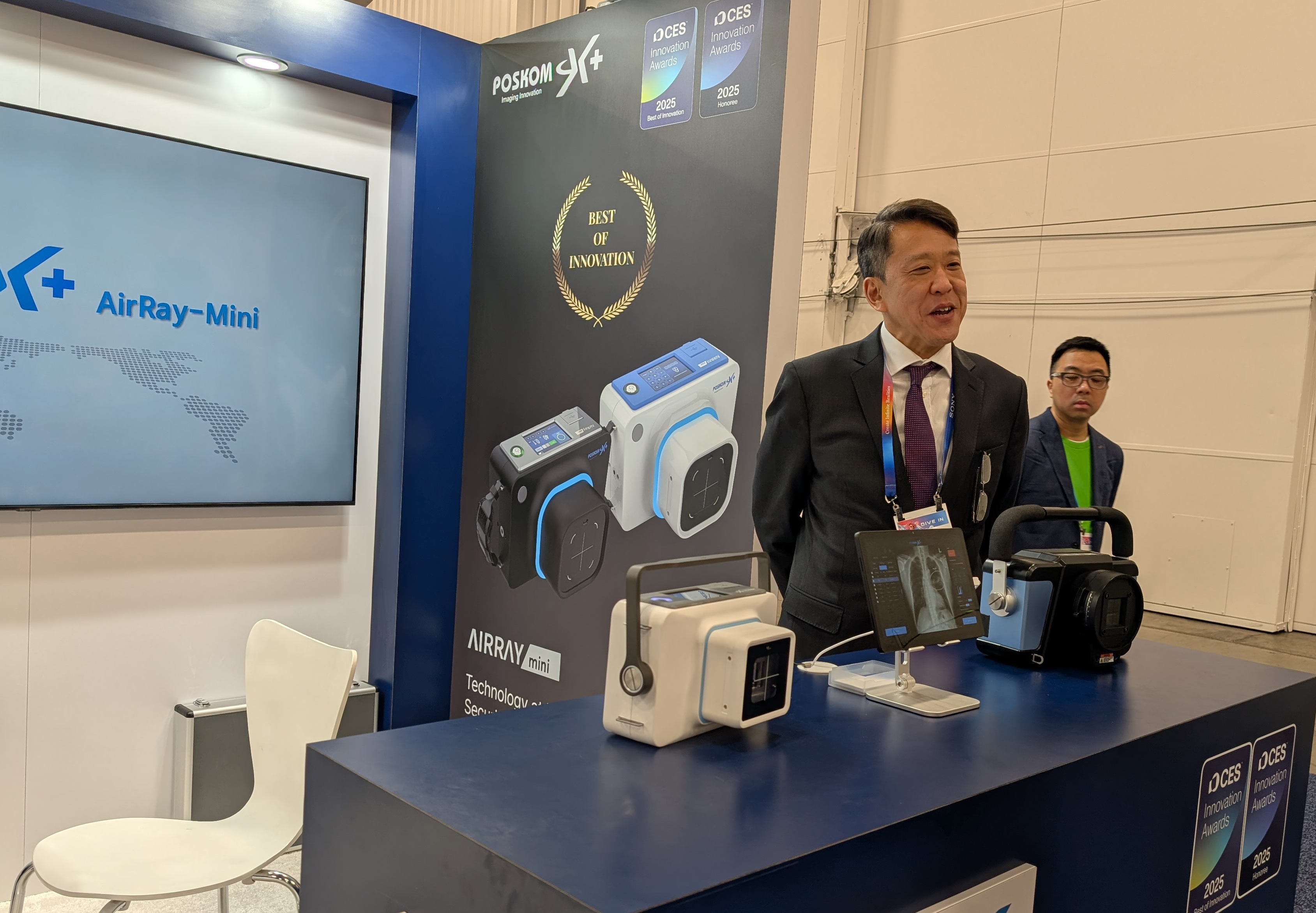
Poskom, CES 2025
I met Eugene Lee before the show and came away impressed by both the products and the team.

LiberLive Stringless Guitar

A sensory-based music innovation that immediately sparked curiosity. A stringless guitar? Why — and how? It struck me as a playful way to enable aspiring musicians.
Website: 🔗 liberlive.com
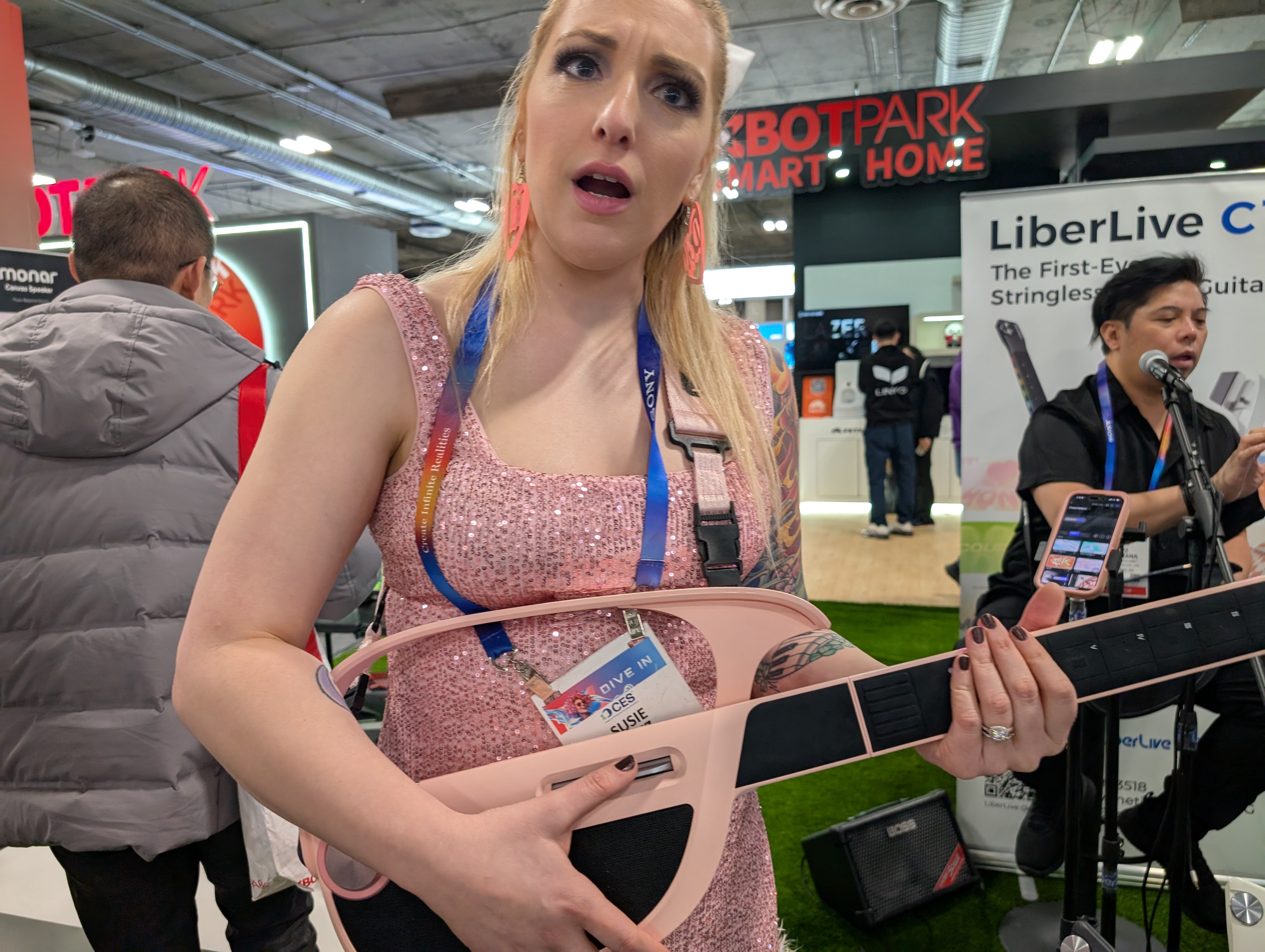
Suzie Cruz demoed the Liberlive stringless guitar. I thought it might interest a friend who plays in a classic rock band, The Kingsmen.

Kara Water

One of my favorite stops at CES. Kara Water solves a real problem — access to clean, fresh water — with a simple yet powerful idea. It’s the kind of innovation that feels both practical and quietly inspiring.
Website: 🔗 karawater.com
Note: Earlier post about Kara Water: https://terri-nakamura.com/2025/10/30/turning-thin-air-into-hope/

None of these were the biggest names at CES. But they sparked curiosity, addressed real-world problems, or simply made me smile — which is exactly what I hope to find.


Extra Ways to Use AI for Sorting and Decision-Making

CES isn’t the only place this approach works. If you’re facing a mountain of information — emails, articles, pitches, or research — an AI assistant can act as a co-pilot. Here are a few additional techniques:

  1. Tagging and Categorization
    Ask it to assign categories or themes (AI, sustainability, health tech).
  2. Priority Ranking
    Have it rank items based on custom criteria like relevance or impact.
  3. Summary + Sentiment Pairing
    Generate one-sentence summaries and assess tone or clarity.
  4. Matrix Building
    Create structured tables with venues, features, timelines, or costs.
  5. Comparative Analysis
    Identify what makes one option stand out within a crowded category.
  6. Drafting Follow-Ups
    Use it to prepare interview questions or outreach emails once priorities are clear.

These techniques apply to job searches, vendor comparisons, research projects, or even travel planning.


What I Learned (and What You Can Too)

If you’re attending CES — or dealing with any kind of information overload — ChatGPT and similar tools can be more than a novelty. They can become genuine productivity partners.

  • 🧠 They help you think clearly by structuring chaos
  • ✍️ They support writing, summaries, and comparisons
  • ⏱️ They save time when pressure is high

Most importantly, they help keep your head above water when the flood is rising — much like the weather in Seattle these past few weeks.

Here’s a post from Engadget describing this year’s show: Everything we’re expecting from tech’s biggest conference in January | https://www.engadget.com/big-tech/ces-2026-everything-were-expecting-from-techs-biggest-conference-in-january-120000106.html


Looking down at some of the many elevators in the Venetian Expo (formerly known as the Sands Expo), the location of Eureka Park, the buzzing startup HUB at CES.

Final Thoughts

Whether you’re a journalist, content creator, founder, or simply a curious explorer, your time and energy are limited. Having an AI assistant can help you focus on what’s truly worth your attention — not just what’s loudest.

Am I doing this again for CES 2026? Absolutely. In fact, I can’t imagine tackling another inbox flood without it.

If you’re attending CES this year, I would love to make your acquaintance. I’ve been connecting with some on LinkedIn though I’m not personally acquainted. Real-life will always be my first choice. Please message me and let me know when you’ll be there.

Ever curious,
Terri Nakamura

© 2025 Terri Nakamura
(All photos © Terri Nakamura, CES 2025, Las Vegas; feature illustration via Nano Banana)
www.terrinakamura.com
Turning Thin Air into Hope

(Photo: Crowd assembling in the Sphere for the Delta keynote presentation, Las Vegas.)

Kara Water is changing how the world thinks about clean water

Every January, I walk into CES with a sense of anticipation that’s hard to describe. Each year, about 140,000 people from around the world arrive to glimpse the future—stepping into a vast, humming, blinking ecosystem of invention where human imagination feels limitless. Advance press releases hint at what’s coming, but I never know what surprises I’ll find. I always come home with stories that remind me why creativity, persistence, and technology are so important.

At CES, there’s a spark that connects everything—whether it’s an IT company like MIXI in Tokyo, manufacturing companion robots for the elderly, or a global brand like Delta Airlines that reminds us even huge innovators often start humbly. Innovation doesn’t wait—and it rarely comes from where you expect it.

Among the hundreds of innovations that caught my eye that week, one stopped me in my tracks: the Kara Pod.

When I met Cody Soodeen, the founder of Kara Water, and his investor, Kerry Dunne, earlier this year at CES in Las Vegas, they stood beside a sleek countertop machine that looked part high-tech gadget and part science-fiction prop. What it did seemed almost impossible: it made pure, mineral-rich water from air.

(Photo: Cody Soodeen, Kara Water CEO, CES 2025, Las Vegas.)

Turning Air into Water

“Water is the most important substance on Earth,” read the Kara Water sign—more truth than slogan. Their device, called the Kara Pod, uses what’s known as Air-to-Water technology. It can produce 3.2 liters of crisp drinking water a day—enough water to brew up to 18 cups of coffee, with no plumbing required.

Imagine a machine that doesn’t run out of water because it creates it.

As I spoke with Cody and Kerry, I couldn’t help but think about a science experiment my friend Linda Criddle does with her summer campers at Little Green Acres Farm in Redmond, WA. She offers STEM experiences, like showing kids how to collect water from the air using two metal bowls—one nested inside the other.

Linda explained, “The core principle is temperature differential. Hot air holds moisture. When the air cools, condensation forms—just like when a cold drink ‘sweats’ on the counter.”

It’s the same principle that Kara Water has harnessed—only their version uses advanced thermoelectric technology to cool air, extract moisture, purify it, and then infuse it with minerals that make it taste naturally fresh.

The Inspiration Behind Kara Water

When I asked Cody what inspired him to create his invention, he said it didn’t start with technology. It started with family.

“It’s a very personal story,” he said. “My parents are from Trinidad. We lived in Pennsylvania and got our water from a well. We thought it was fine—country water, right? But we kept getting sick.”

After endless medical appointments, a naturopathic doctor recommended testing their well water. The results showed extremely high levels of bacteria. “We ‘shocked’ the well, like you’re supposed to, but two months later the bacteria were back,” Cody said. “We were living downhill from everyone else’s runoff, and there wasn’t much we could do.”

The family switched to bottled water, but Cody couldn’t shake the question: Why should anyone have to rely on polluted or unreliable water sources?

Years later, while studying architecture, Cody stumbled upon something extraordinary—a small black beetle that survives in the desert by drinking water from the fog.

“It’s called the Namib Desert Beetle,” he said, eyes lighting up. “When fog rolls in, it climbs up a dune, sticks its legs in the sand, and tilts its body so the condensation runs down into its mouth.”

He smiled. “That beetle changed my life. It lives in one of the driest places on Earth with no energy, no infrastructure—and it still finds water. I thought, If nature can do that, why can’t we?

Kara Water’s name, he explained, comes from the beetle’s scientific name—Stenocara gracilipes. “The beetle is literally built into our logo,” he said, pointing to the smooth, shell-like symbol etched into the Kara Pod’s design.

The Kara Pod by Kara Water on display at the Consumer Electronics Show in Las Vegas
(Photo: Kara Pod on display at CES 2025—the world’s first self-refilling coffee maker, generates enough water to brew up to 18 cups of coffee each day.)

A Decade of Persistence

Cody spent nearly a decade turning the idea into reality. “People think of it as an overnight success,” he said, “but it took ten years of learning, experimenting, and failing.”

The company officially launched in 2021 with its first device, Kara Pure, a sleek air-to-water dispenser that makes up to 2.5 gallons per day. The world noticed. Kara Pure earned TIME’s “Best Inventions of 2022” award—the kind of recognition that doesn’t come easily.

Then, in late 2024, Kara Water unveiled the Kara Pod—its next-generation device that not only made water from air but could also brew a cup of coffee using that same freshly made water.

At CES 2025, that innovation earned them another accolade: the CES Innovation Award. And this October, TIME recognized the Kara Pod as one of its “Best Inventions of 2025.”

Kara Water joins an elite circle of fewer than twenty companies worldwide that have appeared multiple times on TIME’s “Best Inventions” list.

Kerry’s Perspective: A Believer and Investor

When I spoke with Kerry Dunne, one of Kara Water’s investors, he sounded like a proud parent.

“There are rivers of water in the air,” he said. “Cody figured out how to capture it—how to make it clean, pure, and drinkable anywhere.”

He described the process: the machine pulls in air, cools it until water condenses, distills it, removes impurities, and then adds in alkaline minerals.

“Alkaline water is the best kind you can have,” Kerry said. “It’s clean, healthy, and tastes fantastic.”

The result is water that feels crisp and refreshing, with no hint of processing or plastic—just pure hydration, straight from the atmosphere.

When I asked how many Kara Pods were out in the world, Kerry surprised me. “We made a thousand and sold out instantly—in 44 countries,” he said. “And there’s a waiting list of 25,000 people.”

That’s pretty impressive.

(Photo: Investor Kerry Dunne at CES 2025, Las Vegas.)

Simple Operation, Global Potential

One of the things that impressed me most was the simplicity. I asked Kerry if it was tricky to use—did it require a manual?

“You plug it in and forget about it,” Kerry said. “It takes about a day to start producing water, and by the next morning, you’ve got your first glass.”

A Kara Pod can generate 3.2 liters of water per day, depending on humidity and temperature. And because it doesn’t need plumbing, it works in cities, deserts, and even off-grid environments.

Kerry told me they’re working on a solar-powered model designed for regions without reliable electricity. “We’ve got them running in Saudi Arabia, Arizona, and all over Africa,” he said. “Everywhere, they make water every single day.”

Clean water shouldn’t be a privilege, and technologies like Kara Water make it easier to imagine a world where everyone, everywhere, can have access to safe drinking water.

From Concept to Connection

Back at the booth, I watched people’s reactions. Some approached with skepticism, others with wonder. A few even tasted the water—clean, mineral-rich, and surprisingly smooth.

“You’ll love it,” Kerry said. “It tastes remarkably like water.”

It was such a simple, funny line—and yet, true.

That’s the paradox of innovation: the best ideas often make us ask, Why didn’t we think of that sooner?

Kara Water’s journey began with a contaminated well in Pennsylvania and was inspired by curiosity about a desert beetle—a path that eventually led to CES—a stage where the world meets technology’s next big leap.

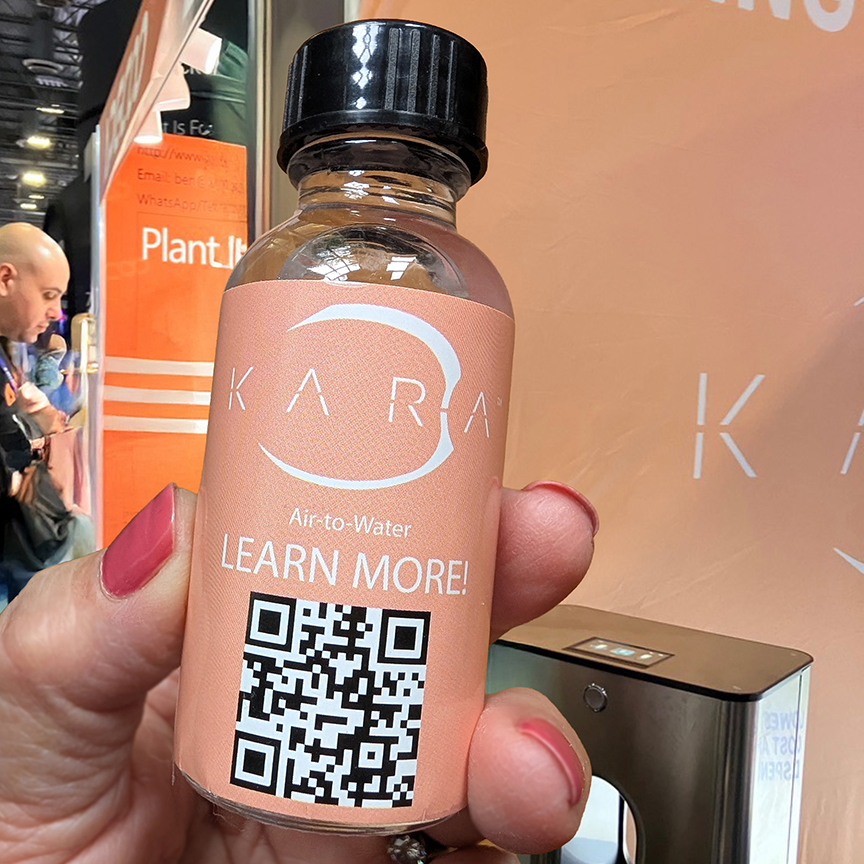
(Photo: Kara Water sample, Las Vegas, January 7, 2025.)

The Science Made Simple

Linda Criddle’s “air-to-water” lesson at Little Green Acres Farm kept echoing in my mind as I viewed the Kara Pod on the exhibit display. Stainless-steel bowls, sweating with dew overnight, are a child’s version of what this machine does with precision and purpose.

Temperature differential. Condensation. Collection. Purification.

The Kara Pod turns those age-old natural processes into something modern, compact, and accessible.

Recognition and Momentum

Since its founding, Kara Water has been gaining attention from major retailers and organizations worldwide. Costco, Walmart, and other large distributors have expressed interest in global partnerships.

But what struck me most wasn’t the corporate excitement—it was Cody’s calm conviction.

Clean water isn’t just a comfort—it’s survival. According to FEMA, having an ample supply of clean water is a top priority in an emergency. A normally active person needs at least two quarts (half a gallon) each day. People in hot environments, children, nursing mothers, and those who are ill need even more.

“We’re just getting started,” Cody said. “Our goal isn’t to sell a million machines. It’s to make clean water possible everywhere. Air is universal—and so should water be.”

Reflections on Discovery

Every year, CES reminds me why I love writing about technology. It’s not just the dazzling displays or the futuristic gadgets—it’s the human stories behind them.

A family’s struggle with unsafe well water. A young architect’s curiosity sparked by a small black beetle. An investor who believes in something that seemed impossible.

And somehow, all of it converges into a device that turns thin air into life.

That’s the kind of story that keeps me coming back to CES. It’s not just about technology—it’s about hope, resilience, and imagination.

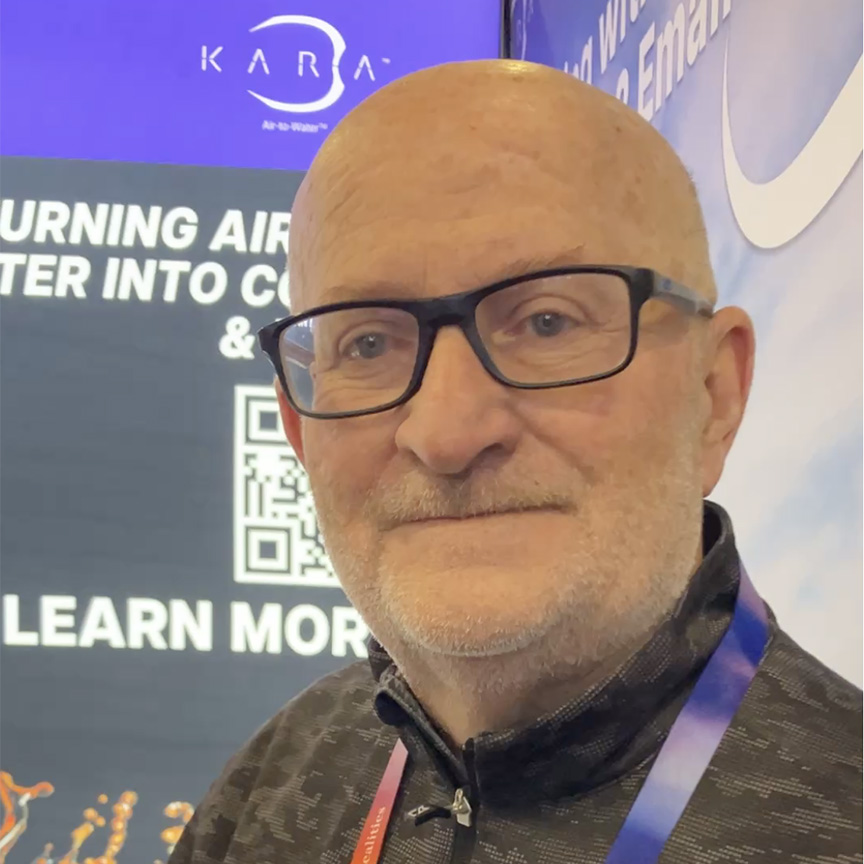
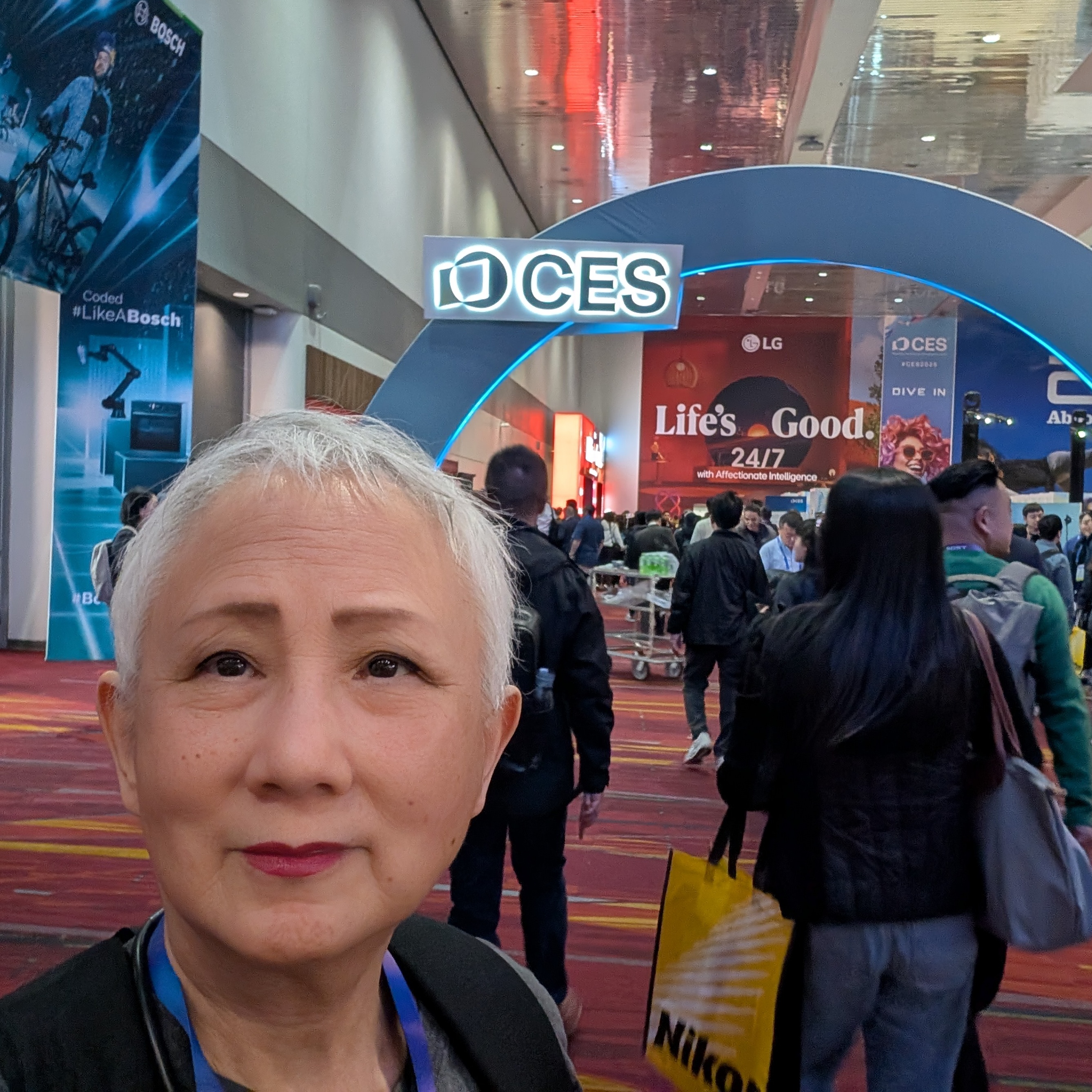
(Photo: Selfie of me at CES 2025 in Las Vegas.)

Looking Ahead to CES 2026

If Kara Water is any indication, the next CES will be filled with even more world-changing ideas, shaping how we move, how we heal, how we communicate, how we power our world, and how we care for the planet.

Innovation doesn’t wait, and neither should curiosity.

CES 2026 happens January 6–9 in Las Vegas. CES is a trade-only event, not open to the general public.

Are you an industry analyst, work in media, or will you attend as exhibitor personnel?

Learn more here: https://www.ces.tech/attendee-guides/registration-information/

If you qualify—and you’re curious about where the world is headed—it’s an unforgettable experience.

  • Through December 1, the Exhibits Plus Pass is $149. From December 2, 2025 through January 9, 2026 the price is $350.  
  • There are also options for the Deluxe Conference Pass that include all conference programming and tracks.

To register: https://registration.experientevent.com/showCES261/

Every year at CES, there’s something that reminds me: the future isn’t coming—it’s already here, dripping quietly from the air.


Do you plan to attend CES 2026? Reach out and leave a comment. Maybe we can connect there!

© 2025 Terri Nakamura
(All photos © Terri Nakamura, CES 2025, Las Vegas)
www.terrinakamura.com