Turning Thin Air into Hope

(Photo: Crowd assembling in the Sphere for the Delta keynote presentation, Las Vegas.)

Kara Water is changing how the world thinks about clean water

Every January, I walk into CES with a sense of anticipation that’s hard to describe. Each year, about 140,000 people from around the world arrive to glimpse the future—stepping into a vast, humming, blinking ecosystem of invention where human imagination feels limitless. Advance press releases hint at what’s coming, but I never know what surprises I’ll find. I always come home with stories that remind me why creativity, persistence, and technology are so important.

At CES, there’s a spark that connects everything—whether it’s an IT company like MIXI in Tokyo, manufacturing companion robots for the elderly, or a global brand like Delta Airlines that reminds us even huge innovators often start humbly. Innovation doesn’t wait—and it rarely comes from where you expect it.

Among the hundreds of innovations that caught my eye that week, one stopped me in my tracks: the Kara Pod.

When I met Cody Soodeen, the founder of Kara Water, and his investor, Kerry Dunne, earlier this year at CES in Las Vegas, they stood beside a sleek countertop machine that looked part high-tech gadget and part science-fiction prop. What it did seemed almost impossible: it made pure, mineral-rich water from air.

(Photo: Cody Soodeen, Kara Water CEO, CES 2025, Las Vegas.)

Turning Air into Water

“Water is the most important substance on Earth,” read the Kara Water sign—more truth than slogan. Their device, called the Kara Pod, uses what’s known as Air-to-Water technology. It can produce 3.2 liters of crisp drinking water a day—enough water to brew up to 18 cups of coffee, with no plumbing required.

Imagine a machine that doesn’t run out of water because it creates it.

As I spoke with Cody and Kerry, I couldn’t help but think about a science experiment my friend Linda Criddle does with her summer campers at Little Green Acres Farm in Redmond, WA. She offers STEM experiences, like showing kids how to collect water from the air using two metal bowls—one nested inside the other.

Linda explained, “The core principle is temperature differential. Hot air holds moisture. When the air cools, condensation forms—just like when a cold drink ‘sweats’ on the counter.”

It’s the same principle that Kara Water has harnessed—only their version uses advanced thermoelectric technology to cool air, extract moisture, purify it, and then infuse it with minerals that make it taste naturally fresh.

The Inspiration Behind Kara Water

When I asked Cody what inspired him to create his invention, he said it didn’t start with technology. It started with family.

“It’s a very personal story,” he said. “My parents are from Trinidad. We lived in Pennsylvania and got our water from a well. We thought it was fine—country water, right? But we kept getting sick.”

After endless medical appointments, a naturopathic doctor recommended testing their well water. The results showed extremely high levels of bacteria. “We ‘shocked’ the well, like you’re supposed to, but two months later the bacteria were back,” Cody said. “We were living downhill from everyone else’s runoff, and there wasn’t much we could do.”

The family switched to bottled water, but Cody couldn’t shake the question: Why should anyone have to rely on polluted or unreliable water sources?

Years later, while studying architecture, Cody stumbled upon something extraordinary—a small black beetle that survives in the desert by drinking water from the fog.

“It’s called the Namib Desert Beetle,” he said, eyes lighting up. “When fog rolls in, it climbs up a dune, sticks its legs in the sand, and tilts its body so the condensation runs down into its mouth.”

He smiled. “That beetle changed my life. It lives in one of the driest places on Earth with no energy, no infrastructure—and it still finds water. I thought, If nature can do that, why can’t we?

Kara Water’s name, he explained, comes from the beetle’s scientific name—Stenocara gracilipes. “The beetle is literally built into our logo,” he said, pointing to the smooth, shell-like symbol etched into the Kara Pod’s design.

The Kara Pod by Kara Water on display at the Consumer Electronics Show in Las Vegas
(Photo: Kara Pod on display at CES 2025—the world’s first self-refilling coffee maker, generates enough water to brew up to 18 cups of coffee each day.)

A Decade of Persistence

Cody spent nearly a decade turning the idea into reality. “People think of it as an overnight success,” he said, “but it took ten years of learning, experimenting, and failing.”

The company officially launched in 2021 with its first device, Kara Pure, a sleek air-to-water dispenser that makes up to 2.5 gallons per day. The world noticed. Kara Pure earned TIME’s “Best Inventions of 2022” award—the kind of recognition that doesn’t come easily.

Then, in late 2024, Kara Water unveiled the Kara Pod—its next-generation device that not only made water from air but could also brew a cup of coffee using that same freshly made water.

At CES 2025, that innovation earned them another accolade: the CES Innovation Award. And this October, TIME recognized the Kara Pod as one of its “Best Inventions of 2025.”

Kara Water joins an elite circle of fewer than twenty companies worldwide that have appeared multiple times on TIME’s “Best Inventions” list.

Kerry’s Perspective: A Believer and Investor

When I spoke with Kerry Dunne, one of Kara Water’s investors, he sounded like a proud parent.

“There are rivers of water in the air,” he said. “Cody figured out how to capture it—how to make it clean, pure, and drinkable anywhere.”

He described the process: the machine pulls in air, cools it until water condenses, distills it, removes impurities, and then adds in alkaline minerals.

“Alkaline water is the best kind you can have,” Kerry said. “It’s clean, healthy, and tastes fantastic.”

The result is water that feels crisp and refreshing, with no hint of processing or plastic—just pure hydration, straight from the atmosphere.

When I asked how many Kara Pods were out in the world, Kerry surprised me. “We made a thousand and sold out instantly—in 44 countries,” he said. “And there’s a waiting list of 25,000 people.”

That’s pretty impressive.

(Photo: Investor Kerry Dunne at CES 2025, Las Vegas.)

Simple Operation, Global Potential

One of the things that impressed me most was the simplicity. I asked Kerry if it was tricky to use—did it require a manual?

“You plug it in and forget about it,” Kerry said. “It takes about a day to start producing water, and by the next morning, you’ve got your first glass.”

A Kara Pod can generate 3.2 liters of water per day, depending on humidity and temperature. And because it doesn’t need plumbing, it works in cities, deserts, and even off-grid environments.

Kerry told me they’re working on a solar-powered model designed for regions without reliable electricity. “We’ve got them running in Saudi Arabia, Arizona, and all over Africa,” he said. “Everywhere, they make water every single day.”

Clean water shouldn’t be a privilege, and technologies like Kara Water make it easier to imagine a world where everyone, everywhere, can have access to safe drinking water.

From Concept to Connection

Back at the booth, I watched people’s reactions. Some approached with skepticism, others with wonder. A few even tasted the water—clean, mineral-rich, and surprisingly smooth.

“You’ll love it,” Kerry said. “It tastes remarkably like water.”

It was such a simple, funny line—and yet, true.

That’s the paradox of innovation: the best ideas often make us ask, Why didn’t we think of that sooner?

Kara Water’s journey began with a contaminated well in Pennsylvania and was inspired by curiosity about a desert beetle—a path that eventually led to CES—a stage where the world meets technology’s next big leap.

(Photo: Kara Water sample, Las Vegas, January 7, 2025.)

The Science Made Simple

Linda Criddle’s “air-to-water” lesson at Little Green Acres Farm kept echoing in my mind as I viewed the Kara Pod on the exhibit display. Stainless-steel bowls, sweating with dew overnight, are a child’s version of what this machine does with precision and purpose.

Temperature differential. Condensation. Collection. Purification.

The Kara Pod turns those age-old natural processes into something modern, compact, and accessible.

Recognition and Momentum

Since its founding, Kara Water has been gaining attention from major retailers and organizations worldwide. Costco, Walmart, and other large distributors have expressed interest in global partnerships.

But what struck me most wasn’t the corporate excitement—it was Cody’s calm conviction.

Clean water isn’t just a comfort—it’s survival. According to FEMA, having an ample supply of clean water is a top priority in an emergency. A normally active person needs at least two quarts (half a gallon) each day. People in hot environments, children, nursing mothers, and those who are ill need even more.

“We’re just getting started,” Cody said. “Our goal isn’t to sell a million machines. It’s to make clean water possible everywhere. Air is universal—and so should water be.”

Reflections on Discovery

Every year, CES reminds me why I love writing about technology. It’s not just the dazzling displays or the futuristic gadgets—it’s the human stories behind them.

A family’s struggle with unsafe well water. A young architect’s curiosity sparked by a small black beetle. An investor who believes in something that seemed impossible.

And somehow, all of it converges into a device that turns thin air into life.

That’s the kind of story that keeps me coming back to CES. It’s not just about technology—it’s about hope, resilience, and imagination.

(Photo: Selfie of me at CES 2025 in Las Vegas.)

Looking Ahead to CES 2026

If Kara Water is any indication, the next CES will be filled with even more world-changing ideas, shaping how we move, how we heal, how we communicate, how we power our world, and how we care for the planet.

Innovation doesn’t wait, and neither should curiosity.

CES 2026 happens January 6–9 in Las Vegas. CES is a trade-only event, not open to the general public.

Are you an industry analyst, work in media, or will you attend as exhibitor personnel?

Learn more here: https://www.ces.tech/attendee-guides/registration-information/

If you qualify—and you’re curious about where the world is headed—it’s an unforgettable experience.

  • Through December 1, the Exhibits Plus Pass is $149. From December 2, 2025 through January 9, 2026 the price is $350.  
  • There are also options for the Deluxe Conference Pass that include all conference programming and tracks.

To register: https://registration.experientevent.com/showCES261/

Every year at CES, there’s something that reminds me: the future isn’t coming—it’s already here, dripping quietly from the air.


Do you plan to attend CES 2026? Reach out and leave a comment. Maybe we can connect there!

© 2025 Terri Nakamura
(All photos © Terri Nakamura, CES 2025, Las Vegas)
www.terrinakamura.com
Social Media’s Impact on Kids – What’s Next for Tech? By Terri Nakamura

Keeping kids safe on social media. Photo: Unsplash with Andrej Lišakov

Social Media’s Impact on Kids – What’s Next for Tech?

During my four days at the Consumer Electronics Show (CES), I had the opportunity to attend only one panel discussion. I’m grateful that I chose to listen and see this particular one in person.

A lengthy queue of eager attendees had formed, all looking forward to hearing insights from the three distinguished speakers, including Mitch Prinstein from the American Psychological Association (APA), Megan Jones Bell from Google, and Ravi Iyer from the USC Marshall School’s Neely Center. The panel was expertly hosted by Corbin Evans, Senior Director at APA.

While my own children are now adults, I find myself thinking about the impact of electronic devices and the potential repercussions of allowing young children access to social media platforms. This concern has taken on a greater significance since I’ve become a grandparent.

The dynamics of social media engagement are vastly different for adults compared to the experiences of children and teenagers. Most adults, myself included, can navigate platforms like Instagram without getting caught up in the potential negative experiences. My personal journey with social media journey dates back to the early 2000s and I’ve been fortunate to encounter very few negative incidents. This contrast underscores the importance of distinguishing between adult, adolescent and pre-teen use.

In sharing this summary, my hope is that it sparks interest among parents, educators, and all who share concerns regarding the profound influence of social media on our kids. It’s a topic that deserves our collective attention as we seek to safeguard the well-being and development of younger generations.


L-R: Corbin Evans and Mitch Prinstein, APA; Megan Jones Bell, Google; Ravi Iyer, USC Marshall School’s Neely Center. Photo © Terri Nakamura

Mitch Prinstein, Ph.D., Chief Science Officer, APA

Mitch Prinstein asked the question, did problems get worse when social media began? He talked about the lack of specific data that correlated between social media and negative effects on mental health including suicide, weight gain or substance abuse. They’re unable to say the current youth mental health crisis has been caused by social media.

When kids are asked, they report a wide array of reasons that affect their mental well-being, such as school shootings, exposure to violence and sexual assault, unrealistic academic pressures, increased polarization, climate change and leadership critique of underrepresented identities. These things exacerbate the current situation, but none are the singular cause of the current mental health crisis.

Image: Mitch Prinstein, APA

It’s important to consider that the adolescent brain isn’t fully cooked, and that teenagers and their developing brains are affected by social media. Even though these platforms were made for adults, kids use them instead, and especially when their brains are changing the most.

During this time when the adolescent brain is changing, the rapidity of change is second only to the changes during the first year of life. The first area of the brain that changes is the part that makes kids roll their eyes, especially at their parents. Prinstein says it’s because of the proliferation of dopamine and oxytocin receptors in an area called the anterior cingulate cortex.

Graphic: Mitch Prinstein, APA

They suddenly become very sensitive to what their peers think, and very interested in avoiding anything that could cause them harm or a social consequence. This is happening around the age of 10, 11, 12 when there is a hyper-charged desire to connect with peers.

Not many years later, we see the full capacity of the pre-frontal cortex, the last area of the brain to develop, which is like the “brain’s breaks,” or the inhibition center that stops people from pursuing every impulse they have.

Between the ages of 10 and 25 is when we see the most social media use. A lot of kids are getting their phones at the time when they’re desiring so much interaction with peers. And they’re unable to stop themselves from the hyper engagement with social media platforms for many years to come.

What Scientists are Asking

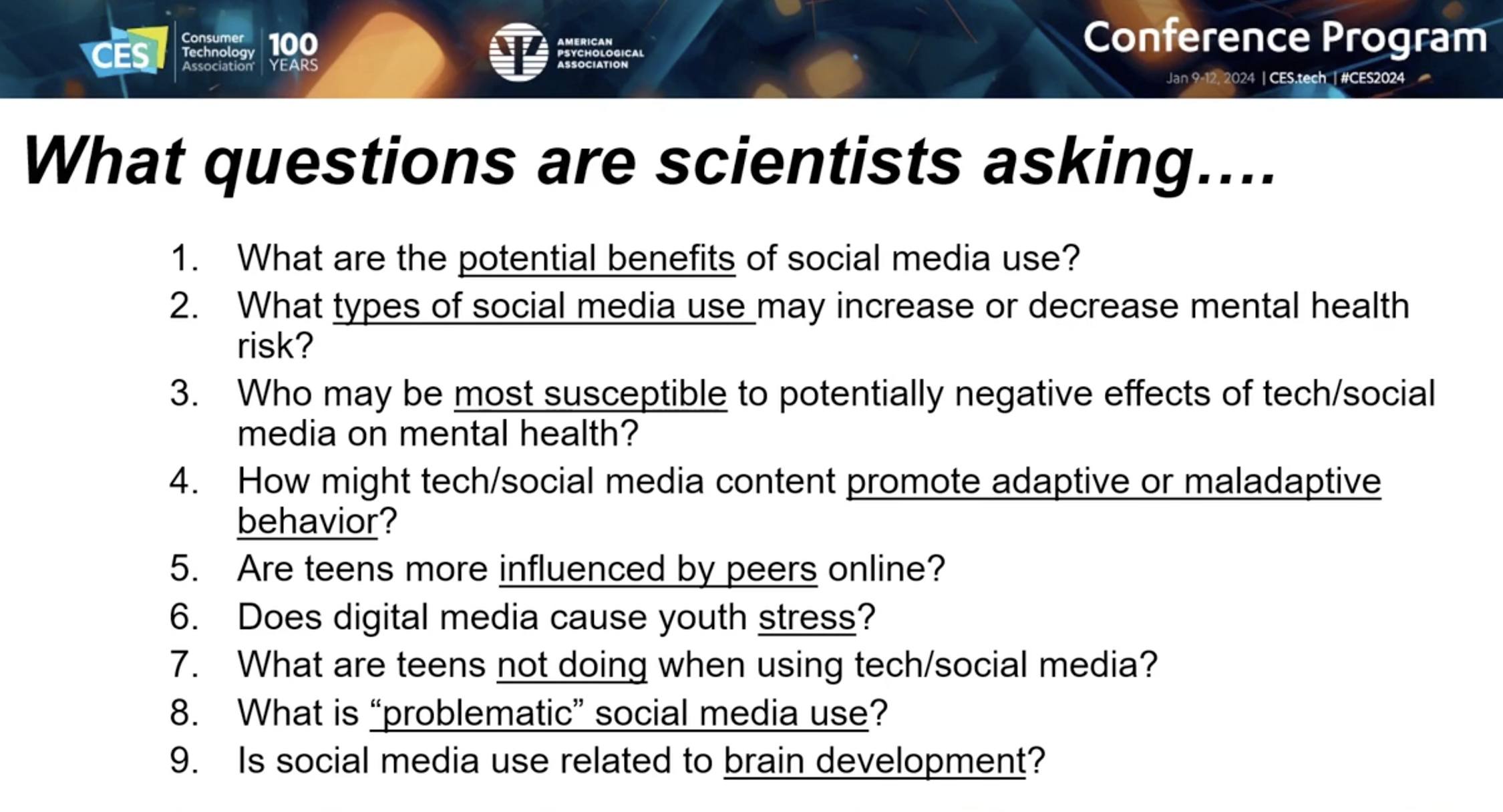
Scientists don’t usually ask if social media is all good or all bad. The scientific community  is asking a variety of other questions to try to understand the effects of digital media on adolescent development. In what ways is social media benefitting or fostering the development of important competencies or relationships?  

What are the ways kids are showing problematic effects of social media use, like addiction? What are the opportunities that kids miss each minute they’re on social media, like sleep and exercise? What ways are kids more susceptible to misinformation?

Graphic: Mitch Prinstein, APA

The APA created a summary of this information in the APA Health Advisory on Social Media and Use in Adolescence: https://www.apa.org/topics/social-media-internet/health-advisory-adolescent-social-media-use

Graphic: Mitch Prinstein, APA

Overall, when we talk about social media, there are 3 separate aspects.

  1. Content on SM that kids generate, seek out, or things that are presented to them
  2. Specific features of SM, the “like button, the endless scroll, the follower counts — these are things that are new and different and change our social relationships.
  3. The AI piece, which is new and evolving, and we know less about.

Parents wonder how much time their kids should spend on social media. If they’re reading the New York Times and talking with their friends about political issues, maybe 20 hours a day? joked Prinstein.

But if they’re on SM and being directed to content on how to cut themselves and how to keep it from their parents, less than a minute would be too much.

We have to think about ways of building competencies that could help their development.

You can google APA Health Advisory on Social Media and get our entire document so parents, teachers and other can see what science is saying. (again: https://www.apa.org/topics/social-media-internet/health-advisory-adolescent-social-media-use)

10 Recommendations for Parents, Platforms and Policymakers

  1. Build and encourage use of functions that promote socialization
  2. Tailor platform design, functionality, and permissions to developmental capabilities
  3. Monitor use for early adolescents
  4. Remove content and mininimize exposure to content that promotes illegal or psychologicall maladaptive behavior
  5. Remove content and minimize exposure to content that promotes prejudice, hate or cyberbullying
  6. Routinely screen for signs of problematic use
  7. Limit use that interferes with sleep and physical activity
  8. Limit use that encourages social comparison
  9. Precede use with training teens in social media literacy
  10. Provide resources for continued research on the positive and negative effects of social media on development.

(Excerpted from the graphic below.)

Graphic: Mitch Prinstein, APA

Our recommendations are reflective of a scientific perspective, on how social media can be used to foster healthy and adaptive social milestones, but we need parents to be monitoring social media use. Not looking over their shoulders, but to talk with their kids about what they’re experiencing on social media.

We’re asking tech companies to really think about the adolescent brain and its unique vulnerabilities and capabilities, and to think about making the experiences of an 8 year old on social media different from the experience of an 80 year old on social media. We’re looking at different ways to screen for problematic use, we’re calling for a take down discriminatory and harmful content  — content that encourages maladaptive or psychiatrically disordered behavior.

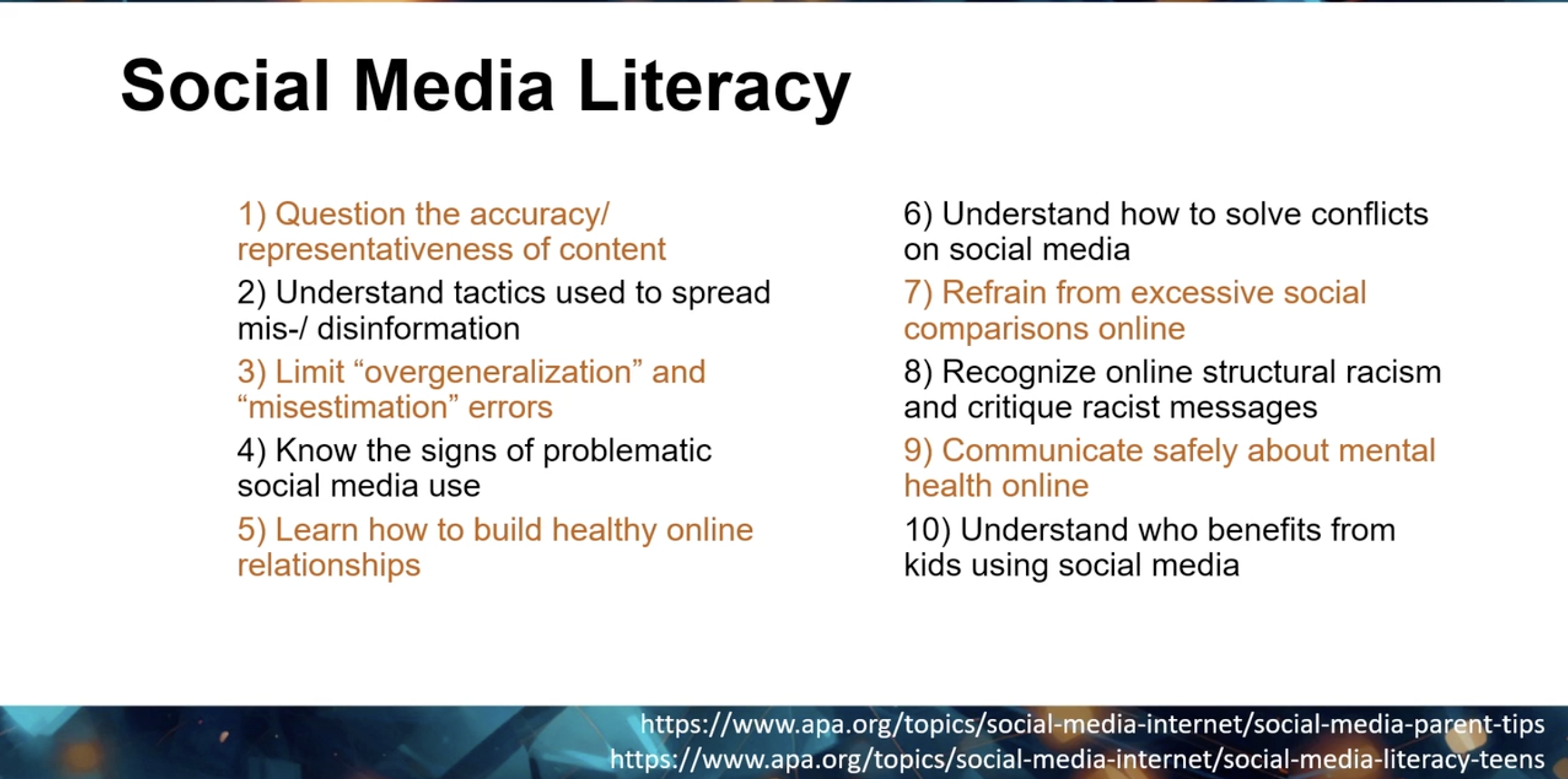
In particular we’re interested in fostering a conversation around social media literacy. We don’t just give kids the keys to a car and wish them luck as they head down the driveway. We make sure they know how to operate a car in a way that would be safe for themselves and others. With social media, there are no tests to demonstrate that they have the competency to understand fake profiles, mis- and disinformation, how to combat cyber-hate and how to engage in adaptive ways of solving interpersonal conflict. This is based on psychological science. Psychologists have developed interventions to teach kids these skills effectively, so we have those tools. It’s time to bring them to scale. 

https://www.apa.org/topics/social-media-internet/social-media-parent-tips

https://www.apa.org/topics/social-media-internet/social-media-literacy-teens

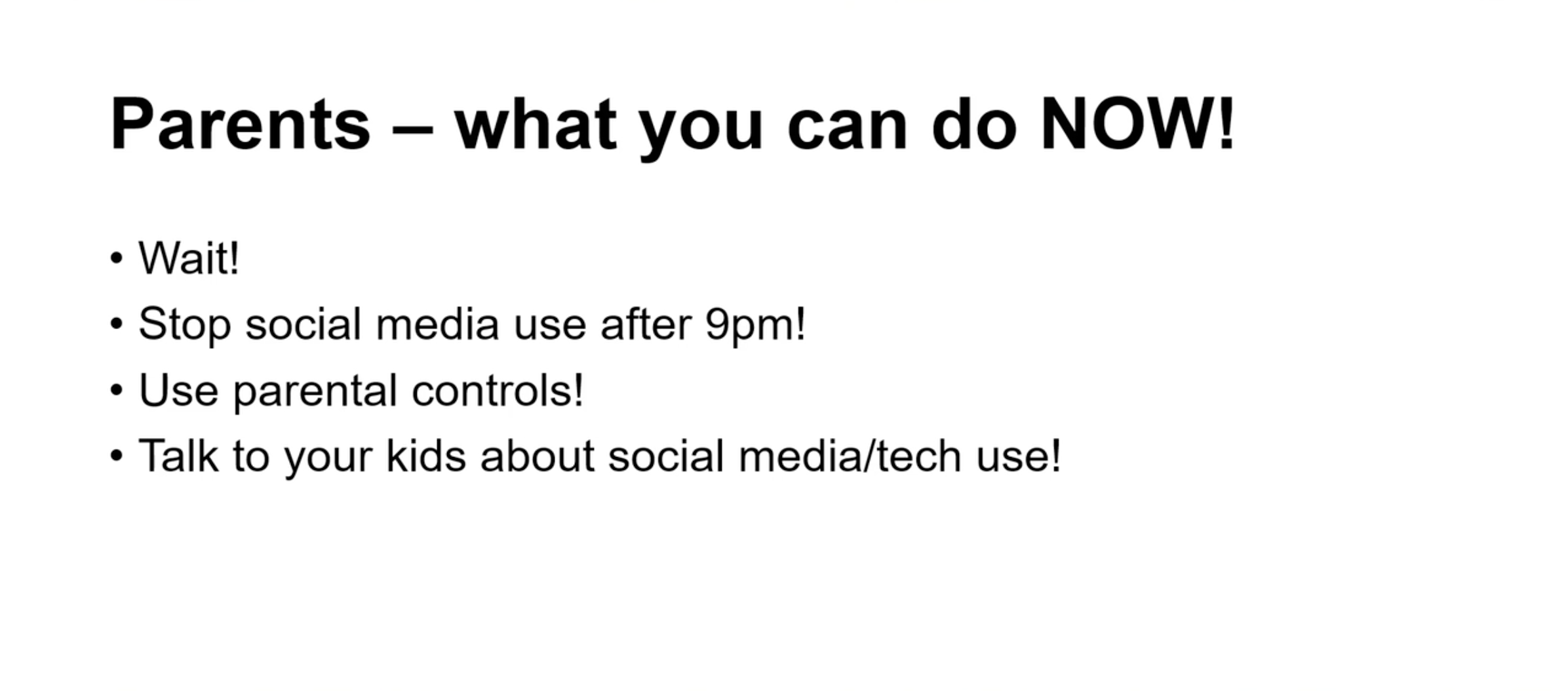
Parents can do so much in this space. There is no psychological science that shows kids are harmed by NOT being on social media. We can stop social media use after 9 PM, use parental controls, and build social media competency.

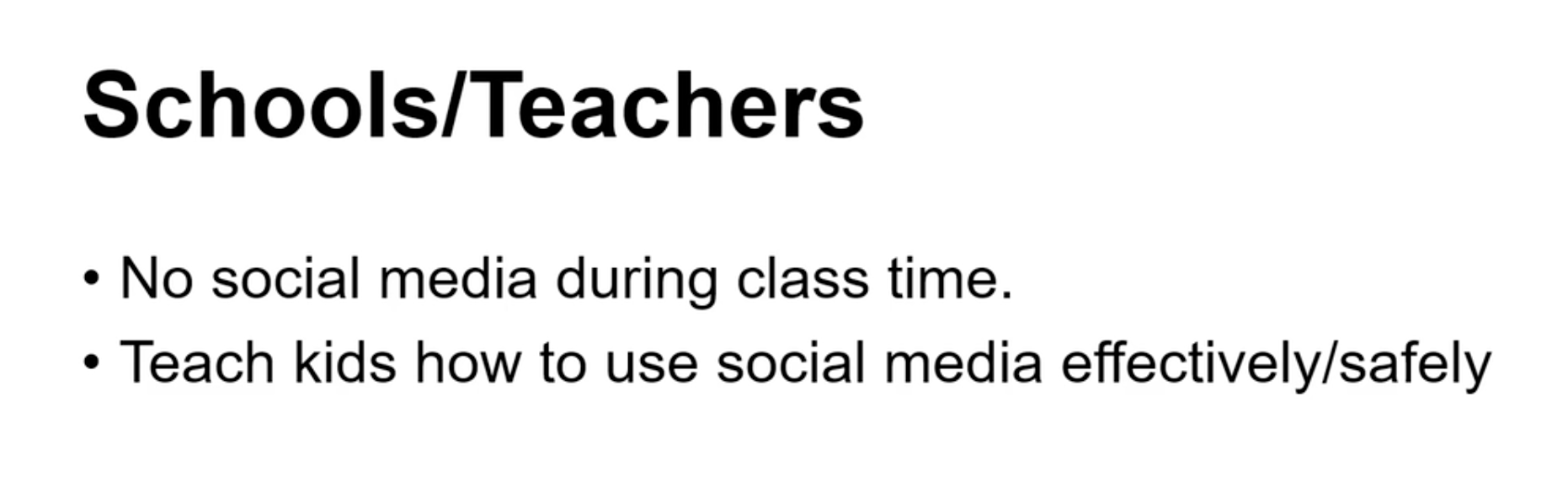
Prinstein suggested that social media should not be allowed during class time, and that schools/teachers should be teaching kids how to use social media safely, and that educators should be teaching kids about the online world. (My note: I’m not an educator, but I have an issue with integrating social media into schools. I see teachers as being burdened with integrating societal changes, which has had a significant impact on their work, and I doubt that educators have the capacity to handle “one more thing.”)

We need to get lawmakers to make sure that kids and their data are protected and we’re not sacrificing their development to help others make a profit.

And we need the tech industry to think of ways that they can put child safety over the model of increased and constant engagement. There are ways this can be accomplished, and that’s what we hope for.


Megan Jones Bell, PsyD, Clinical Director, Consumer and Mental Health, Google

Megan Jones Bell leads consumer and mental health across Google. She shared an overview of how Google approaches the objective of keeping kids and their mental health in the spotlight, highlighting their work on YouTube.

Google is all about creating online experiences that empower kids. Its goal is to provide enriching, safe, and age-appropriate online spaces that respect children’s unique needs while giving families control over technology. Jones Bell said Google builds these experiences with safety in mind from the start, and she shared some recent work done on YouTube, although the efforts extend across Google products.

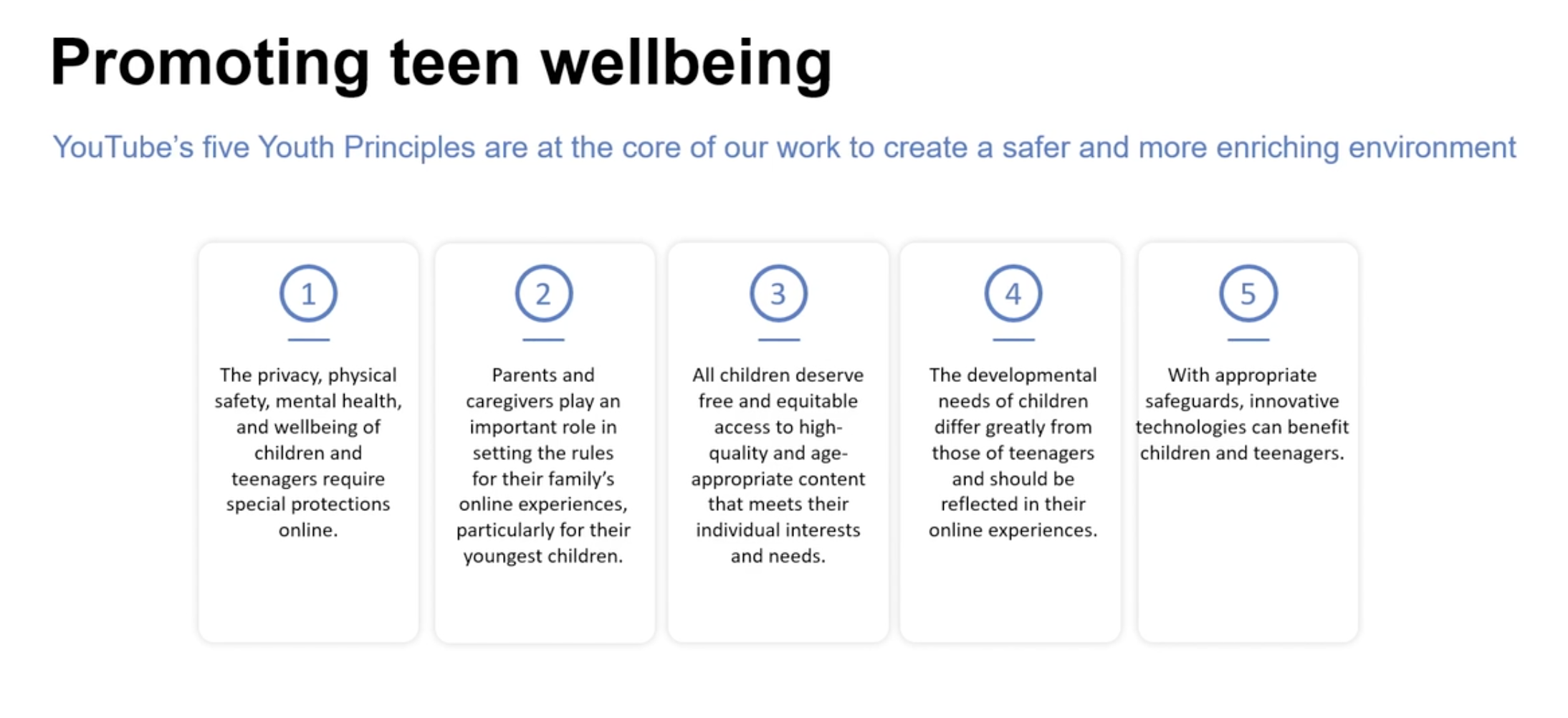
Jones Bell focused on recent work they’ve done on YouTube. Kids’ mental health, which requires special protection online. They’ve developed 5 Youth Principles that form the core of the work that Google does to create a safer and more enriching environment.

Image: Megan Jones Bell, Google. (Excerpt from graphic, below)

  1. Kids’ mental health requires special protection online
  2. Parents and caregivers should have a say in how technology is used within their families.
  3. Every child deserves access to high-quality, age-appropriate content that suits their interests and needs. 
  4. Developmental needs of children differ from teenagers’, so tech should reflect that. 
  5. With the proper safeguards, kids can benefit from and use innovative technologies. 

Google has already introduced features like “take a break” and bedtime reminders in many Google products, but they’re enhancing them to be more effective by creating moments for pause and reflection. 

Image: Megan Jones Bell, Google

One thing they’re about to roll out is an all-screen takeover (third panel). These will be more disruptive and create more moment to pause which we know is more likely to get someone to disengage.

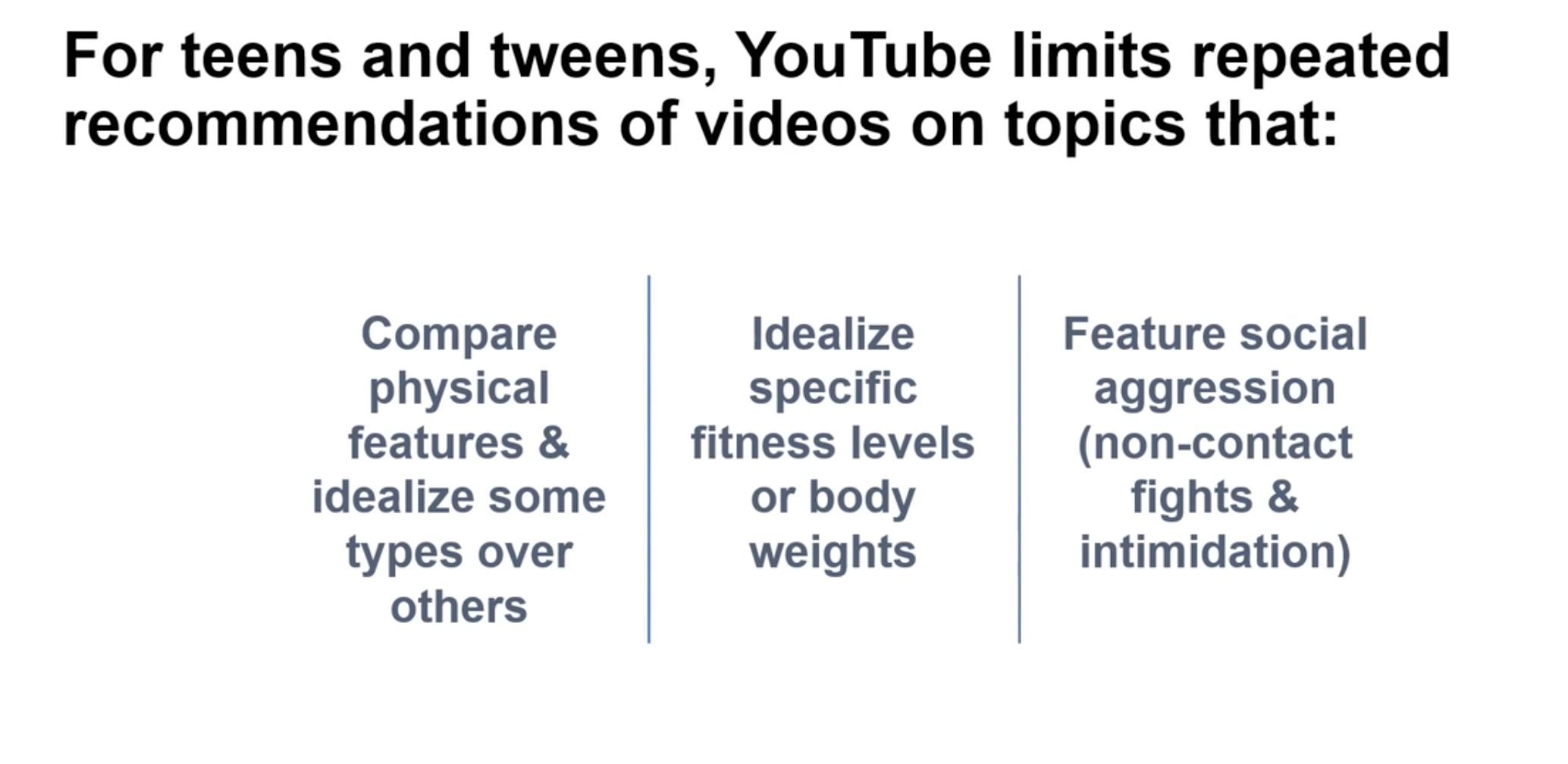
They’re also changing the way they recommend content by focusing on limiting repeated suggestions of videos that might promote unhealthy social comparisons or social aggression among young viewers. They’ve been eliminated from the “watch next” algorithm on YouTube.

Image: Megan Jones Bell, Google

Google wants to ensure that the content they suggest is safe and positive. To support users during difficult moments, they’ve updated their crisis resource panel to encourage safer searches and offer crisis resources more prominently. (It was a small blue bar in its earlier iteration, but the new “pause” page on the right, is a full-screen takeover.) This way, people are more likely to find help when needed. 

We know from our research that slowing people down in moments of crisis will lead to disengage from problematic search.

Image: Megan Jones Bell, Google

In terms of promoting high-quality health information, they’re working to elevate high-quality mental health content for young teens by collaborating with experts at the National Academy of Medicine and organizations like the World Health Organization. They’ve also partnered with Common Sense Networks to provide training and resources for creators, helping them make responsible and helpful content and promote digital well-being. These are just some steps they’re taking to create a safer and more enriching online environment for kids and teens.

Image: Megan Jones Bell, Google


Ravi Iyer, Managing Director of the USC Marshall School’s Neely Center

Ravi Iyer was present to discuss how we can design social media to have a positive impact on mental health. While social media isn’t solely responsible for mental health issues, there are ways to make it better for those who are affected negatively. Here are two key takeaways:

Platform Accountability: We should hold social media platforms accountable for their design choices, not just the content they host. Creating spaces that discourage harmful activities and incentivize positive ones is essential.

User Experience Surveys: We can use surveys to gauge user experiences and validate whether platforms improve their design. By listening to users’ concerns and feedback, we can ensure that the changes implemented align with their needs.

During his time at Facebook, he realized that existing policies didn’t cover some harmful behaviors, such as fear speech and subtle misinformation. They focused on design changes to address this, like removing engagement incentives that encouraged negative interactions. They also introduced rate and functionality limits to prevent a small group of users from dominating discussions.

These ideas have been compiled into a design code for social media. It acts similarly to building codes. While preventing every bad thing from happening online is impossible, we can hold platforms responsible if their design choices promote harmful behavior. By doing so, we aim to empower users to engage with content that aligns with their aspirations rather than just what grabs their attention.

Says, Iyer, “We’ve started measuring user experiences by asking people about positive and negative encounters on social media platforms. This helps us understand which platforms are improving and where improvements are needed. For instance, LinkedIn stands out for having fewer negative experiences and fostering a more positive environment.”

In the world of AI, we’re also keeping an eye on user experiences to catch potential harms early as AI adoption grows.

In summary, we can create a healthier online environment by holding platforms accountable for their design choices and continually measuring user experiences to ensure progress.


Postscript

CES, one of the largest global tech events in the world, offers thousands of compelling reasons to be make the pilgrimage.

Among the foremost is the chance to be present for groundbreaking product launches. It’s a place where B2B deals and investments are made. It’s a chance to witness the debut of inventions and feel the sensation of the future unfolding before your eyes. You can not only observe but actively interact with innovations. The experience far exceeds articles on the Internet, or mere observation.

We have access to the stories and inspirations behind new technology that exemplify how visionary founders and engineers were driven to bring their dreams to fruition. We can hear from the inventors first-hand and feel the passion fueling their journeys.

In addition to introducing new technology and innovations, CES is a knowledge hub where industry luminaries deliver breaking news at press conferences, and lead thought-provoking panel discussions. These sessions provide an invaluable opportunity to glean insights into the ever-changing landscape of our world. The perspectives are the most up-to-date and feature the best practices across various sectors.

The “Social Media’s Impact on Kids” session featured a stellar panel of speakers. They offered rare glimpses into the behind-the-scenes initiatives driving research and policy, bringing changes to the forefront. It was a journey into understanding the relationship between education, research, and technology, showing how these forces combine to safeguard our children and families.

I did my best to accurately represent the concepts shared by the panel. Any omissions while conveying their thoughts, were unintentional.

In closing, thank you for your interest in this post. CES is the convergence of innovation, knowledge, and potential in technology. It’s a realm where the future is not a distant idea but a tangible reality waiting for us to explore. It was my privilege to take part.


Additional Information:

There are countless resources to support consumers who seek information on social media and its effect on children and adolescents. Here are a a few links to articles related to this post.

Social Media Literacy:

https://www.apa.org/topics/social-media-internet/social-media-parent-tips

https://www.apa.org/topics/social-media-internet/social-media-literacy-teens

Global principles for identifying credible sources of health information on social media:
https://www.who.int/teams/digital-health-and-innovation/digital-channels/global-principles-for-identifying-credible-sources-of-health-information-on-social-media

Health advisory on social media use in adolescence

https://www.apa.org/topics/social-media-internet/health-advisory-adolescent-social-media-use

Neely Center Design Code for Social Media

Neely.USC.edu/Design-Code

Leveraging Google’s Technology to Improve Mental Health
https://researchblog.duke.edu/category/responsible-conduct/

Common Sense – Prepare Your Students for Success in a Connected World

https://www.commonsense.org/education


More about Terri

Her book: Blogging on Instagram
Her store on Alki Beach: Alki Surf Shop
Her business: Terri Nakamura Design+Social
Terri Nakamura on Twitter
Alki Surf Shop on Twitter
The Horsfall House on AirBNB
Terri Nakamura on Linktree

Conversation with Neal Schaffer

Terri Nakamura, Hunter Huntington the Maine Coon, and Neal Schaffer

Exciting things have happened since I published my book, Blogging on Instagram: Engagement Writing on One of the World’s Best Social Media Platforms.

One of the most surprisingly fun experiences has been doing podcast interviews. For those of you who listen to podcasts, you might not be aware of what goes into making them happen.

Each host has his/her own protocol for preparing for a podcast episode. Many conduct pre-production “meetings,” to prepare the guest. The pre-conversation could touch on sequence, types of questions and other things to expect. I’ve found it helps me be relaxed going into an interview because I understand what is going to happen.

Others hosts do zero prep and let the podcast interview become a spontaneous conversation. This is more like “My Dinner With Andre,” a 1980s movie of a 2-hour dinner conversation. They’re often entertaining but this format can leave a guest with a feeling of uncertainty.

There are also pointers for a guest. I found some terrific suggestions from Billy Samoa, CEO and co-founder of Podify, and shared them in an Instagram blogpost.

I recently listened to Celeste Headlee, an award-winning journalist, professional speaker, 20-year veteran of NPR, talk with Jaime Jay about what goes into making a great interview happen. She offered some great advice the best podcasters have employed in preparing me to be a guest on their shows.

It was exciting to finally meet Neal Schaffer at a pre-production meeting. He described our interview “as if we we ran into each other at a conference, and had a conversation where people overheard us like a fly on the wall.” So the interview was a conversation, but Neal also prepared by doing research. The result revealed unexpected information in a fun and interesting way.

Please give a listen to Episode 29 of Neal Schaffer’s “Your Digital Marketing Podcast.

Thanks for listening!

Grow Your Instagram Naturally

Podcast: When It Worked | Host: Julian Leahy – 11/29/21

Click graphic to listen:

Description from John Leahy podcast interview with Terri Nakamura

“I made a concerted effort a few years ago to grow my following. I would try to find somebody who posts similar content to me and I would follow them. I would see the kinds of people they were following and if you look at their list you can kind of tell if somebody looks like they’re kind of in the same niche that you’re in. If you follow those people there’s a pretty good chance that they’ll follow back and that’s kind of what I did for about a year trying to grow my following because I was stuck at 3 500 for years and years before that.

On Automatic Instagram Tools

“I did it manually because I think instagram really frowns upon people who use apps and services to get there. They can tell somehow, so I don’t advise you to try to cheat.

“The big shortcut is buying followers and they can definitely tell when people are just fake followers. On instagram you can end up actually losing your account if they figure out that you’re doing things like that.

“I was just doing it by hand. I would follow like 20 people a week or something like that so it wasn’t wasn’t highly efficient or fast but it was faster than if I did nothing at all.

‘At least with follow backs you know they are real because you picked them out and followed them in the first place. If you just do nothing but follow back those who followed you, you will just end up following bot accounts which are useless.

What Is Blogging On Instagram?

“It’s a disruptive approach to blogging. If you have spent a lot of time trying to develop a blog from scratch you will find that it is a lot of hard work. You basically have to cultivate a mailing list and subscribers in order to have any kind of traction on a blog.

“However, with instagram it’s completely different. Let’s say you have 100 followers on instagram it would take a long time for you to develop 100 subscribers on a blog.

“You already likely have this audience on instagram and that audience is very amiable to see what kind of content you’re posting. So you have this channel where you have an automatic audience.

“It’s pretty unbeatable access to your audience because they really want to be there. They’re not having to be cajoled into clicking a link or making a big time investment because there is a 2200 character limit on instagram. You’re not going to ever be required to read 5000 words of a blog post. Instagram keeps things to a pretty magic manageable length.

Why This Works

“It just cultivates a lot of engagement. The engagement part of it is what’s really unique because it’s like there’s a dialogue that takes place between your followers and you and makes them feel more connected to your brand.”

Available on Amazon:

Available at Elliott Bay Book Company, Seattle, WA

https://www.elliottbaybook.com/book/9781637304471

Episode 51: Terri Nakamura – Harnessing the Power of Social Media

Thoughtrow Podcast | Hosts: Rod & Inci Jones | 12/2/21

Click image to listen

SHOW NOTES – Thoughtrow Podcast

Episode 51: Terri Nakamura – Harnessing the Power of Social Media

In this episode, show co-hosts Rod & Inci Jones share their quote of the day and motivational thought, and then discuss the pros & cons of social media and how its impacted their social media presence.

After Rod & Inci’s brief discussion, they introduce Terri Nakamura, who is a Social Media Consultant, Designer, Writer, and Author of “Blogging on Instagram: Engagement Writing on One of the World’s Best Social Media Platforms”.

Their guest Terri Nakamura discusses with them the power of blogging on Instagram and its benefits. Teri shares her tips on how to be more effective in building your brand and notoriety on social media.

She gives the number one takeaway from the interview today, and what would benefit people most when it comes to building their social media presence.

Paperback and eBook available on Amazon

On Barnes and Noble:

https://www.barnesandnoble.com/w/blogging-on-instagram-terri-nakamura/1140055219?ean=9781637304471

On the shelves at Elliott Bay Book Company, Seattle

https://www.elliottbaybook.com/book/9781637304471

Seattle’s Homeless: Building Communities

Homeless in Seattle

terri-nakamura-another-view-of-airport-way-seattle-20160910_145212

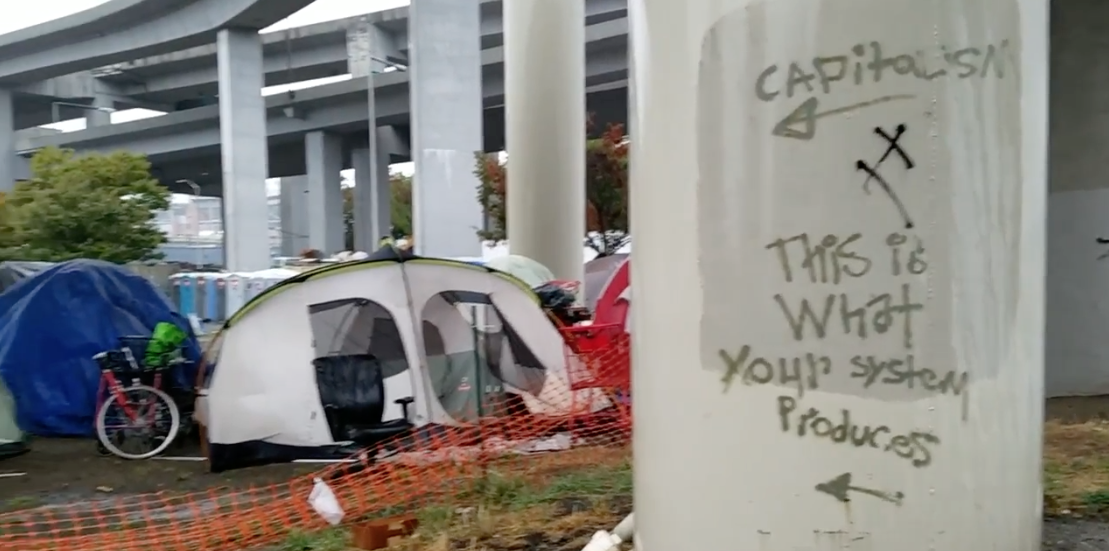
Over the course of the past six months I’ve watched a homeless encampment sprout and take over a strip of land along Airport Way S., on the edge of Chinatown in Seattle.

I’d been tempted to stop and check it out, but felt wary. Unlike the nearby Nickelsville encampment, which appeared to be orderly and governed, Airport Way S., looked scarier.

On my way to work one sunny day in late summer, through my open window, I heard live music coming from the camp, and decided to pull over and park.

Three visiting pastors from S. Carolina and Kenya were leading a youth group who came to minister, distribute clothes and entertain the people living in the camp.

They were happy to talk:

pastor-azon-and-pastor-solomon-terri-nakamura

Volunteers minister to homeless

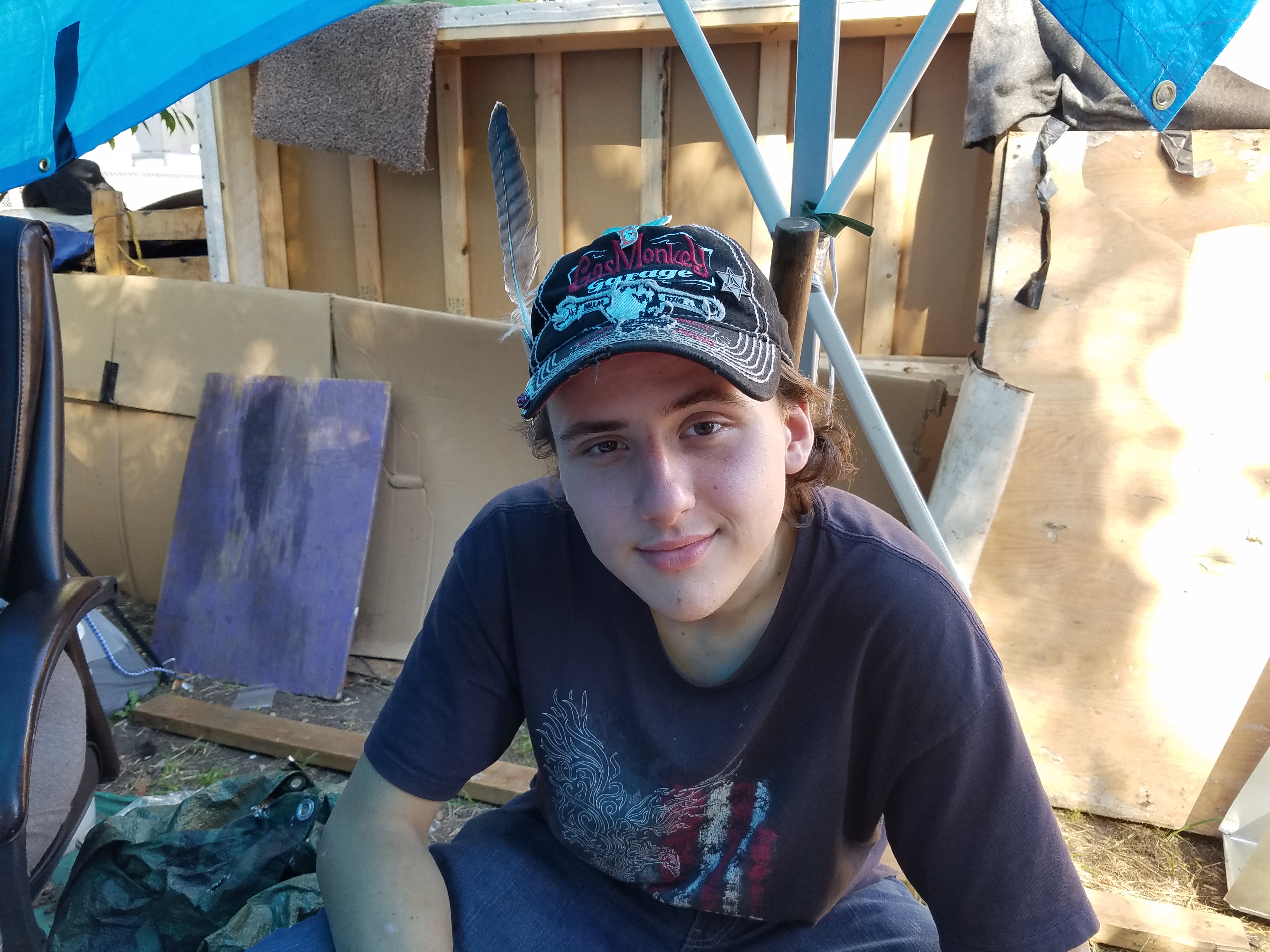
After interviewing the volunteers, I wandered between tents, parked vehicles and makeshift structures, and came upon a three-sided tent where a few people were sitting around a table. I thought they might be “in charge,” but they were inhabitants. One man was coloring in a coloring book; a woman was industriously rolling cigarettes, (which she was selling to others in the camp); and a third was a young man who had been on the road for a while and found himself in Seattle with no means to live. Here’s our conversation:

terri-nakamura-jaster-of-the-cheshire-airport-way-seattle-20160910_145659JC: I’ve been here 7 days and I’m a traveler.
TN: So how did you even find this place [homeless encampment]?

JC: It’s not hard when you’ve been on the streets as long as I have. You find places like this relatively easily.

TN: So how long have you been on the streets?

JC: Since before Katrina. I left one year before Katrina and I haven’t been back since. I was supposed to be there but I came here for a friend. If I had a forge and foundry, I wouldn’t be here.

TN: So you’re a metal worker?

JC: I’m a blacksmith, yes. I generally end up making weapons, chain mail, hell, if I had a bunch of coat hangers, I could make something right now. And I can could pack that b1tch out custom. All I need to do is get their measurements.

terri-nakamura-homeless-cigarette

TN: That’s quite an operation you have there (talking to a woman making cigarettes) they look quite professional

JC: I love those little packers. I had a small one once.

[Guy comes up to buy cigarettes and talks to the woman. There are 20 in a pack. He’ll come back for two packs.]

TN:  (to the woman) So, how long have you been here?

Woman: I’ve been here three weeks.

TN: This place wasn’t here a couple of months ago.

Woman: It’s probably because people get pushed out of certain areas. And then they get pushed into another place. This is kind of what happened.  I’ve seen it before. Make a community, make a family.

TN: Someone comes along and says, “OK you guys can’t stay here anymore,” — then what happens? How do you find a new place?

JC: Day by day we look and we see little things. Like I know of about 50 sleep spots that I could  use and no one would ever see me.

TN: You’ve been in Seattle seven days and you know of 50 sleep spots? That’s pretty amazing.

JC: It’s not hard. Walking around, you see ’em. I’ve been in this life for a while.

TN: You don’t seem very old.

JC: I know I don’t. I’m actually not that old. I’m 20.

Woman: I’m 27.

TN: You guys both look young.

JC: My name is Jaster of the Cheshire. Don’t ask me how to spell Cheshire.

TN: You sound like a Game of Thrones character. 

JC: I like to make things with my hands. I like to work on my own. I don’t work well with some people who mess with the creole boy. Oh he1l, no. I’m a crazy Louisiana boy.

TN: You don’t have a southern accent.

JC: Because that’s how long I’ve been away from home. The only time my southern comes out is when I’m angry. Or drunk. I drink on someone’s birthday or when someone dies. 

That’s a good way to grieve. I want to send my friend off and i want him to know I’m smiling and enjoying myself, knowing one day I’ll join him, wherever in the he1l we’re going.

TN: Well, I wish you the best of luck.

JC: I wish you luck, too.

TN: Thank you. Everybody needs some luck.

JC: We do. It helps us through everything we do every day. Lady Luck can sometimes be a cruel mistress.

Homelessness can be the result of many causes, including drug addiction, untreated/undiagnosed mental health issues, domestic violence, and tragic life events like death of a loved one, job loss, and family disputes.

Natural disasters or the elimination of options due to financial stress are other causes. It’s possible to be living a normal life until circumstances drastically change.

A friend found himself in several of the conditions above, and became homeless. I wanted to talk with him about his journey, but during the process of searching for him, I discovered he had died. There are people all around us who, as a result of some bad luck and lack of support, find themselves in his shoes.

terri-nakamura-homeless-staking-a-claim-20160910_144219

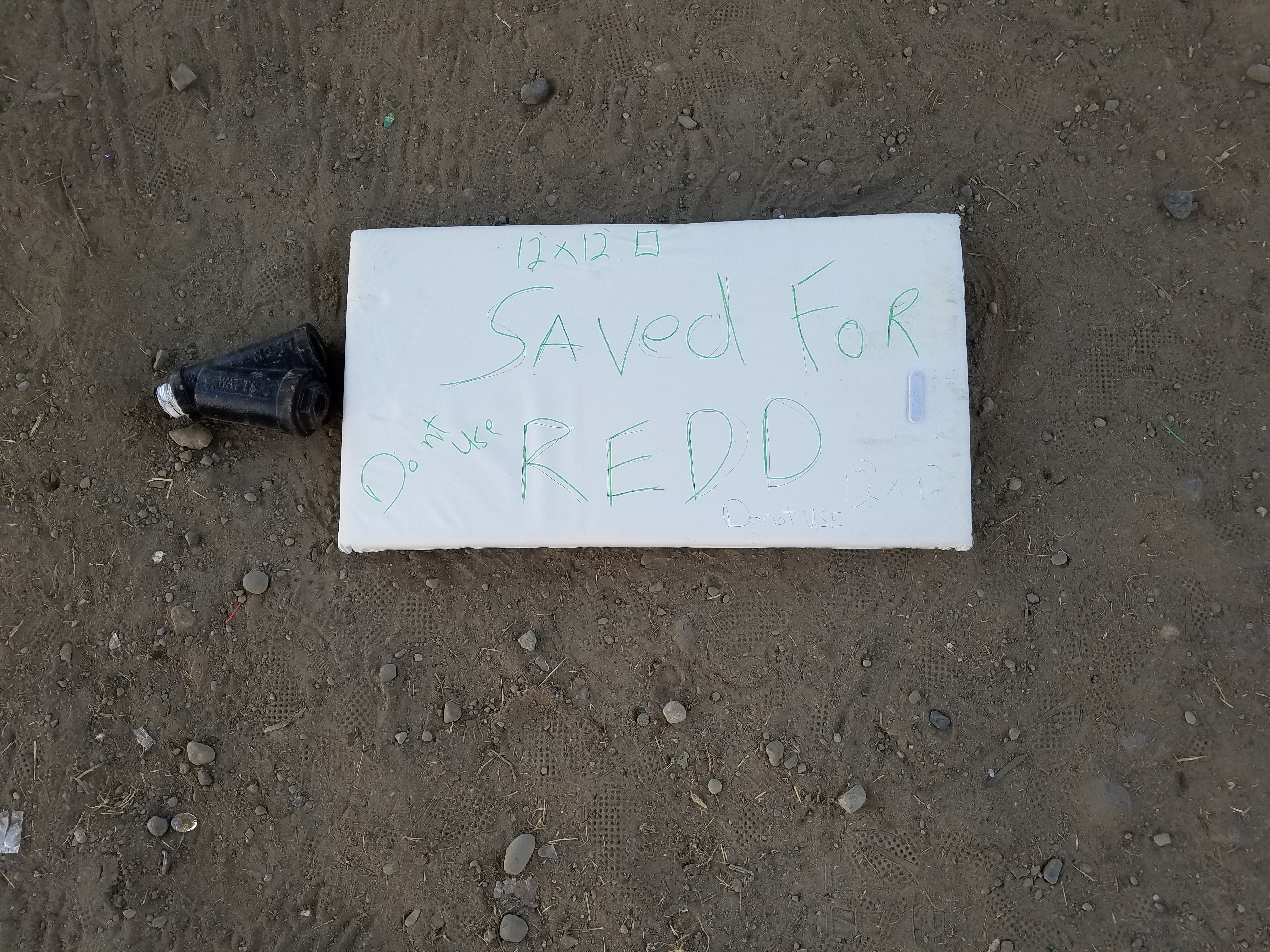
A border around a 10′ x 10′ plot of dirt was being reserved for “Redd.”

Homelessness is a concern to almost everyone in this city. On a neighborhood blog, I read a thread about homeless people camping in greenbelts, and the huge amount of trash they generate and leave behind. People had concerns about health, safety and how homeless encampments can negatively impact a neighborhood.

One idea was to create an area for homeless people to stay or camp, where restrooms and facilities for washing or bathing and disposing garbage are made available. One person likened homeless people to unwanted pets that have become too burdensome to maintain, then released in the wild.

Despite studies, meetings and participation by community organizations, there has yet to be a permanent solution.

Should Seattle make itself a hostile environment for homeless people?

Are urban campgrounds the answer?

Homelessness is a vexing problem here. Our city government is spending  time and money to identify a solution, and other groups are also working toward an answer.

terri-nakamura-homeless-on-airport-way-seattle20160910_145138

Tent City Collective has an objective: To mobilize, educate and unite students and people experiencing homelessness in order to end the many inequities that perpetuate homelessness.

It’s a lofty goal. But when the warmth and sunshine of summer gives way to the cold and rain of fall and winter, the solution can’t come fast enough.

I’ve gone back to visit the Airport Way S. camp twice more. It still looks scary, but the people living there are not. They arrived for all kinds of reasons, and they are bonded by their circumstances.

Those living there hang onto the community they’ve created. And when they’re forced to move, they will start again. The cycle will repeat itself until we find an answer.

terri-nakamura-homeless-camp-airport-way-seattle

A miserable place to exist


Domestic violence is one of the major causes of homelessness.Verizon Wireless supports Hopeline, where donated phones are then turned into valuable resources for nonprofit organizations and agencies that support domestic violence victims and survivors nationwide.

The video and photos in this post were shot using a Samsung Galaxy S7, provided by Verizon Wireless.

More about Terri:

One Man’s Journey to Homelessness

will-and-high-school-friends

How does a guy who seems to have everything end up living in a tent and dying alone?

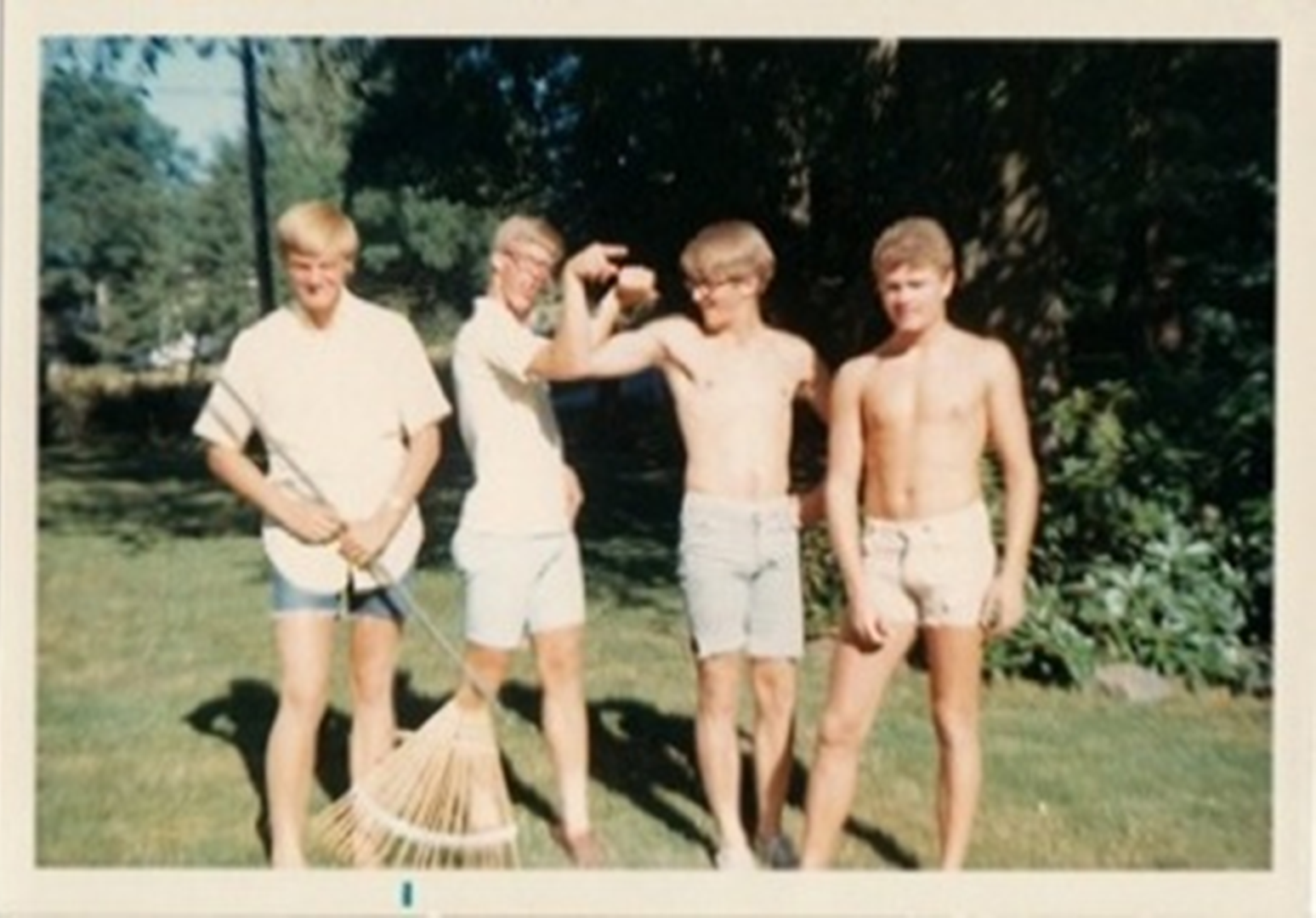
On the far right in the photo above, alongside several high school friends, stands Will, posed like Michelangelo’s David. Showing hyper-focused inclinations since childhood, Will was born March 12, 1950, and grew up in Burien, Washington. He (and the friends in the shot) graduated from Highline High School in 1968. Will then went on to earn a B.F.A. in 1978 from the University of Washington.

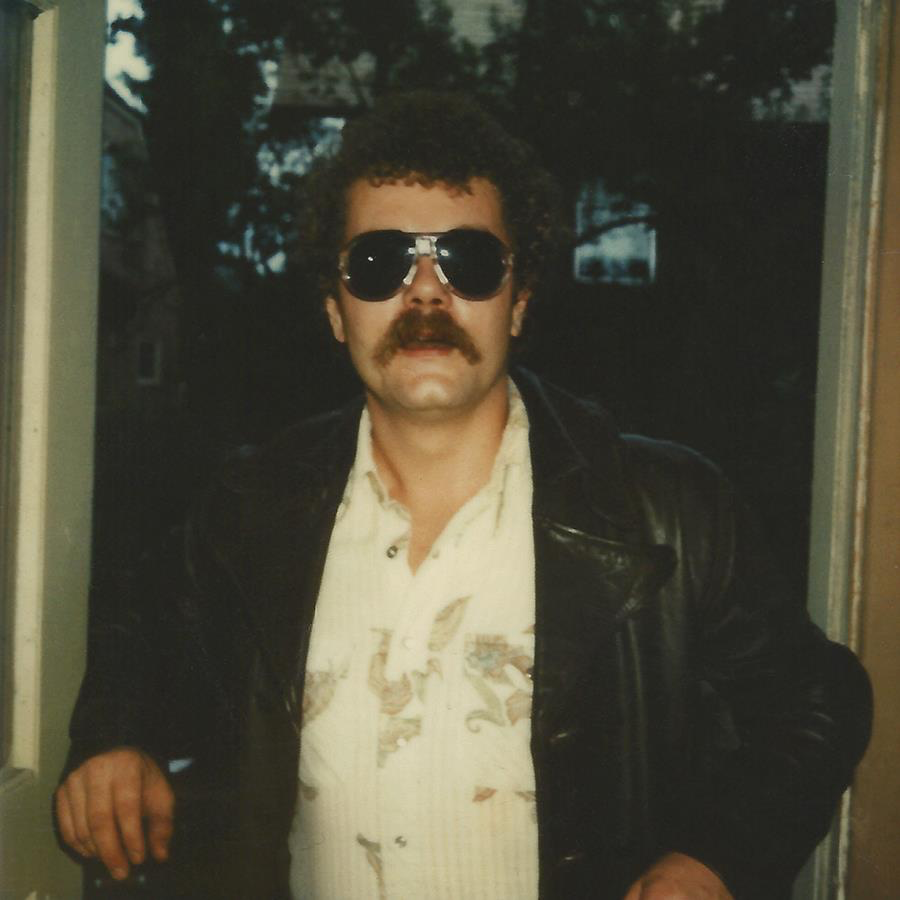
Will was creative. When he was in high school he did a poster for a dance featuring Magic Fern, a rock band from Seattle in the ‘60s. He loved music. He and his friend, George, attended the first Sky River Rock Festival and Lighter Than Air Fair. Like many who grew up in that era, he was a serious fan of the Grateful Dead, but he also liked Talking Heads, Devo, Jazz and David Guetta. He had an adventurous spirit. He traveled to far away places including Europe, India, Goa, Tibet, Turkey and Afghanistan.

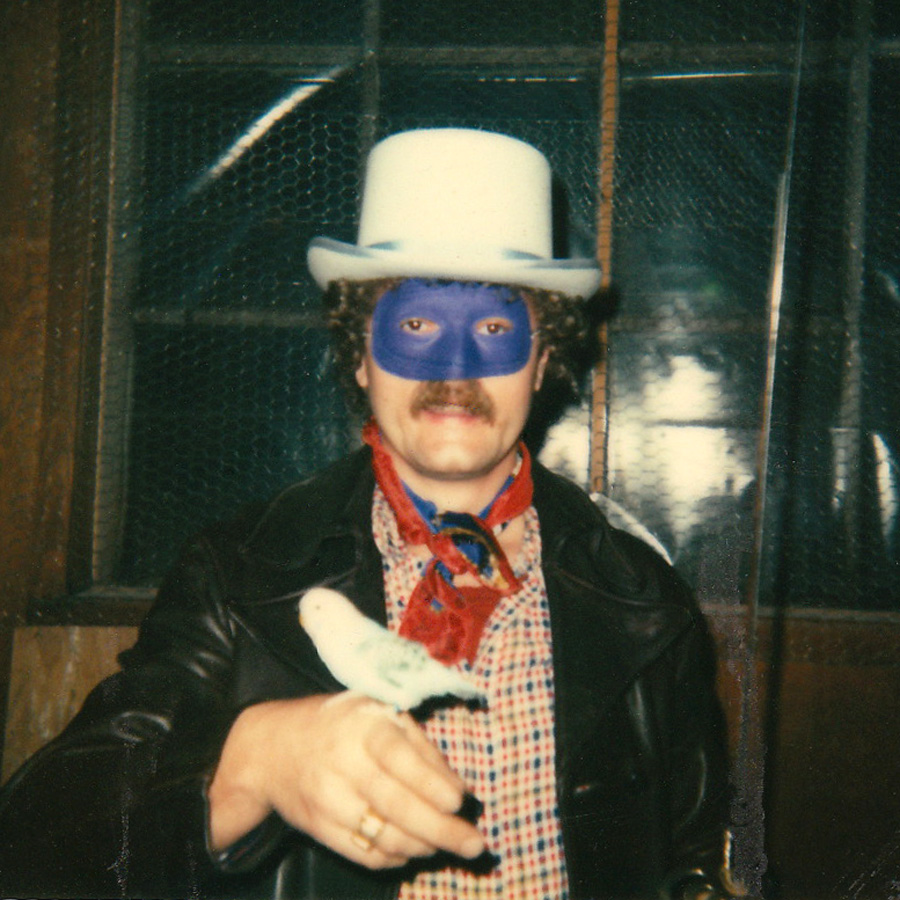
Following a prolific period as a sculptor, Will got a day job as an employee of the UW as a painter in the facilities department. The job was boring, but his life was not. He loved wine and learned to make it, producing gallons of it, then moved on to making whisky. He converted part of his rental house into an aviary and began breeding hundreds of budgies of every imaginable color. He got hooked on mineral collecting because his friends Roy and John were rockhounds—and within a year, he had acquired $2,000 worth of specimens. But his true passion, which may have contributed to his downfall, started in 1990 when he began to breed red and white Siberian Huskies.

will-and-budgie

Mike, a long-time friend since the second grade, says, “From the first day I met him, he would jump into something with both feet. The first thing was his penny collection. He was focused and would immerse himself in things.” Or as his friend Roy puts it, “When Will gets into something, he gets into it.”

He continued to work at the UW until he was injured. After that, he survived on disability and doing odd jobs, and continued creating fractal art, and largely lived what seemed to be a reasonably normal life that included new friends as well as old.

Until about 2007, Will lived in a rented home in the Bryant neighborhood of Seattle. He was a great story teller, had a friendly way about him, and hung around with an erudite group of people including other wine aficionados and brainy people who worked on Cray computers and on projects like Boeing’s Star Wars program.

Then one day, everything began to change.

The owner of Will’s rental passed away, and the heirs decided to sell the house he was renting. Will was evicted.

At first he stowed his possessions in his friend, Henry’s, basement. Henry didn’t mind keeping Will’s things, but didn’t want anyone extra living in his home. Will was able to come and go as he pleased, and all was fine until he crossed the line and surreptitiously began to sleep there. His act of defiance had a negative effect on their friendship.

Part of his income stream was a years-long project, painting Mike’s house. He would hole up in Mike’s garage and take showers in the basement. It wasn’t the greatest for Will or Mike’s wife and kids.

In trying to piece together the sequence of events, Roy looked through a pile of photos and came across a camping picture. It was taken in March, 2010. By then, Will had already been living with his dogs in his van for a couple of years.

Will knew the spots where he could wash up and where he could source food. Roy says, “He would camp in public spots in neighborhoods. For a couple of years he parked in a church parking lot. They knew he was homeless, and eventually people in the area knew him and didn’t hassle him.”

To help him make some money and put a roof over his head, other friends hired him to paint their summer home and let him live there as long as he needed. The house was empty and surrounded by land where the dogs could romp freely. There were soft beds, electricity, a kitchen and bathroom, and living room with a television. It seemed like an ideal way to get him out of his car and into a home.

But at some point, it was discovered that even though Will had access to a free, warm and comfortable home, he continued sleeping in his van with his dogs while he worked on the house. He used the kitchen to cook, and used the bathroom for bathing, but he ran an extension cord from the house to the van where he would watch movies and sleep with his dogs.

A transition had taken place: Will no longer felt comfortable living inside of a normal house.

The unraveling of Will’s life occurred gradually. Each stage of the progression, by itself, struck everyone as “weird,” but then, Will was an odd duck, so it didn’t seem entirely crazy. If anyone would choose an unorthodox path, it was he.

Unlike many homeless people, Will had some resources. One family member supplied him with a cell phone for a while. He had his disability income. He owned some valuable assets. He had friends who were living normal lives. And he was eligible for temporary housing, but only if he would give up his dogs.

Erin, a family friend says Will was approved for housing six times, but wouldn’t go because he didn’t want to give up his dogs. Rather than part with his Huskies, he chose to live in his car.

Will and Mocha.png

Will was diabetic and not taking good care of himself. Even in the best of circumstances, it can be hard to stay on top of the disease. He blacked out while driving, and crashed his van. His friend, Paul, helped him buy another, and he crashed it, too. To finance the third, Roy helped him sell his mineral specimens. He crashed three vans before he began living in a tent.

Living in a tent is hard. Roy visited Will at one of the camp sites and saw insulin pens were all over — but no testing stuff. He was just taking shots and not monitoring his diabetes

Says Paul, “At the end of 2013, he was living in a tent with his two dogs in a public park in Federal Way, and had been there for a couple of months. Henry and I had a long talk with him about getting him care, and said we could help him find a place and get him set up IF he would get rid of the dogs. We even found someone who was willing to take the dogs and would have provided better care for them, but he refused.”

He was able to live for a while in Nickelsville a homeless encampment on South Dearborn at the edge of Chinatown. It didn’t last long. He bucked authority, got into an argument with the guard, and was evicted. He moved back into a tent. Once a week, Roy would pick him up and take him out for food and let him wash his clothes.

By New Year’s Day 2014, Will was in Harborview Medical Center, looking like a “crazy homeless guy with his hair all over his face.” It was a particularly cold winter. He had suffered frostbite on his fingers and toes, and didn’t lose any of them, but he was not in good shape. While at Harborview, he punched his doctor because she got too close, and didn’t recognize his long-time friends, Paul or Henry. He didn’t realize his dogs were gone. (The dogs were placed in a “No Kill” shelter in Federal Way.) Will felt he was being held prisoner. Clearly, he was not thinking clearly.

Will looked close to death, but by the time February came along, much to everyone’s surprise, he continued to survive. He was moved to St Francis Hospital in Federal Way and was placed in the Progressive Care Unit. He seemed to be coming along.

Toward the end of July of 2015, Will moved to an adult family home in Federal Way, near Roy. The proximity made it possible for Roy to visit each week and take him out for a meal.

Paul reports Will didn’t adjust well at first. In the family home, there were four children under the age of 10 also living there The TV was tuned to Sesame Street. It was a circus. So Paul got Will a laptop thinking he could watch movies and things of his own choosing. But Will would balance it precariously and would lose his balance when he used it. The landlord asked to have the laptop removed. The owners had Will’s best interests at heart, but he couldn’t follow the rules.

A month later, on August 28, 2016, Will died.

When asked about the cause of death, Roy was told “he was worn out.”

His friend, David, says, “Will was a character, sometimes following a rhythm only he could hear. He graduated from the UW with a fine arts degree and went off to India with a lovely blonde girlfriend. Came back dressed all in white—the coolest guy around. A kind and unconventional man, he didn’t always make the best choices, but he was always a loyal friend.”

Like so many homeless people who never expect it to happen to them, anyone reading this post could, at any time, find themselves teetering over the edge into the rabbit hole. Is it mental illness, the failure of a system, random bad luck, or a combination of all of the above?

Will is missed by his friends. They ask themselves if they could have done anything more to change the course of his life. But Roy sums it up perfectly: “He wanted to take care of himself, and wanted to live life in his own way.”

Will, August 29, 1981.png

Photo taken August 29, 1981

Will, March 12, 1950 — August 28, 2016


More about Terri:

The Caring Economy — Earth Day 2016

 What companies do every day

Earth Day, established April 22, 1970, has become the largest secular observance in the world, and is celebrated by more than a billion people annually. It’s a day where people are more mindful about the environment and reflect on what they can do to help preserve and protect the planet.

But the earth needs our care every day — not just on Earth Day. Here is what a few companies are saying and doing:

Alki Surf Shop 

Having our business on Alki Beach means we have a front row seat to observe Earth Day and the forces of nature. We are aware of the ebb and flow of the tides. We look out at sailboats being driven by the wind, and hear the high-pitched calls of seabirds as they wheel overhead. When the sand is hot, we stick our toes in the cold salt water of Puget Sound – home to an irreplaceable, teeming ecosystem – and gaze up at the snowcapped Olympic Mountains glistening in the sun. And we realize that all of this is interconnected and must be protected for all time. — Kahuna Dave, Beach Bum and CEO, Alki Surf Shop

Alki Beach Sunset © terri nakamura - small

Apple

Apple’s recycling efforts recovered 89 million pounds of materials in 2015, including copper, silver, aluminum, steel, zinc, and $40 million worth of gold.

A commercial featuring Siri and promoting “Liam,” debuted today. Liam is a robot designed to dismantle and recycle iPhones. https://www.youtube.com/watch?v=99Rc4hAulSg

Siri and Liam commercial

Amazon

Amazon is always on the lookout for ways to reduce the company’s impact on the environment.

  • Shipping packages are made from recovered fiber content, and are 100 percent recyclable
  • Amazon incorporates sustainable and eco-friendly materials in their buildings (six of their buildings have been awarded LEED Gold certification)
  • They make “Green” products available to consumers (www.amazon.com/greeAmazon Earth Day Bookn).

Today, Amazon offers “The Four Seasons – An Earth Day Interactive Children’s Storybook” as a free download.

Google

One of Google’s goals for the products they create is to be good for the environment. A few points worth noting:

  • Google has been carbon neutral since 2007.
  • They are the largest corporate buyers of renewable energy on the planet.
  • Their data centers use 50 percent less energy than typical data centers.

“We live on a beautiful planet, and it’s the only one we’ve got,” says Sophie Diao, 2016 Google doodler.

To see a history of Google Earth Day doodles, visit: http://time.com/4304384/google-doodle-earth-day-2016/

Sophie Diao Google Doodler Earth Day 2016

Value Village 

A “clothing spill” appeared yesterday on Alki Beach. Electric Coffin, a creative company whose efforts were sponsored by Value Village, was deployed to create installation art made of discarded/donated clothing. The conical spirals appeared to be “poured” from an oil barrel into a “pool” of colored clothing at the base. Informational oil-barrel lids told more of the story to passersby. The work brings attention to the volume of textile waste generated by people each year, which averages to be 80 pounds per person in North America.

Sidewalk Art - composite © Terri Nakamura-small

Verizon 

In honor of Earth Day 2016, Verizon has made a commitment to plant 50,000 trees this year.

But on an everyday basis, Verizon is a good corporate and global citizen that works to protect our planet as well as better serve their customers. A few statistics of note:

  • Verizon has 206 Energy Star-certified stores, offices and centers
  • 289 of their retail stores are LEED-certified
  • Verizon has reused, repurposed or recycled 50 million mobile devices to date
  • Employees have collected and recycled 2.1 million pounds of e-waste.

Verizon impacts and how to make a difference


Whether you did something to honor Earth Day, or if  you did nothing more than enjoy family, friends and colleagues and the world around you, I hope we can all do things in the future to help make it possible to celebrate many more.


Apple, Google and Verizon images sourced at URLs cited; Alki and Value Village images shot by Terri Nakamura, using a Samsung Galaxy 7, courtesy of Verizon Wireless.

I’m proud to participate as a member of Verizon’s social media outreach team. My posts are about my own personal experiences.  No compensation is provided, nor are favorable comments promised. All opinions are my own.

More about Terri: